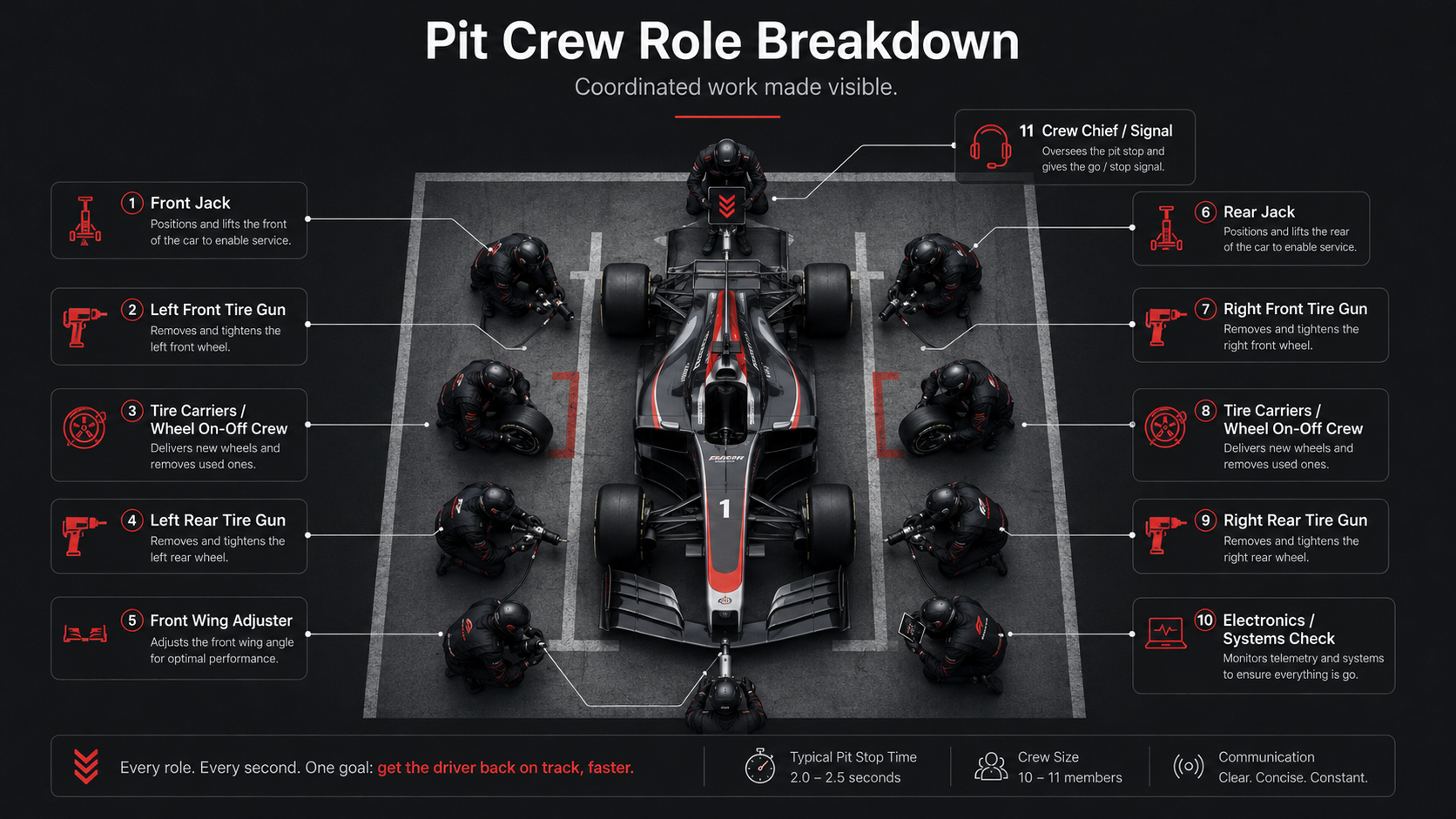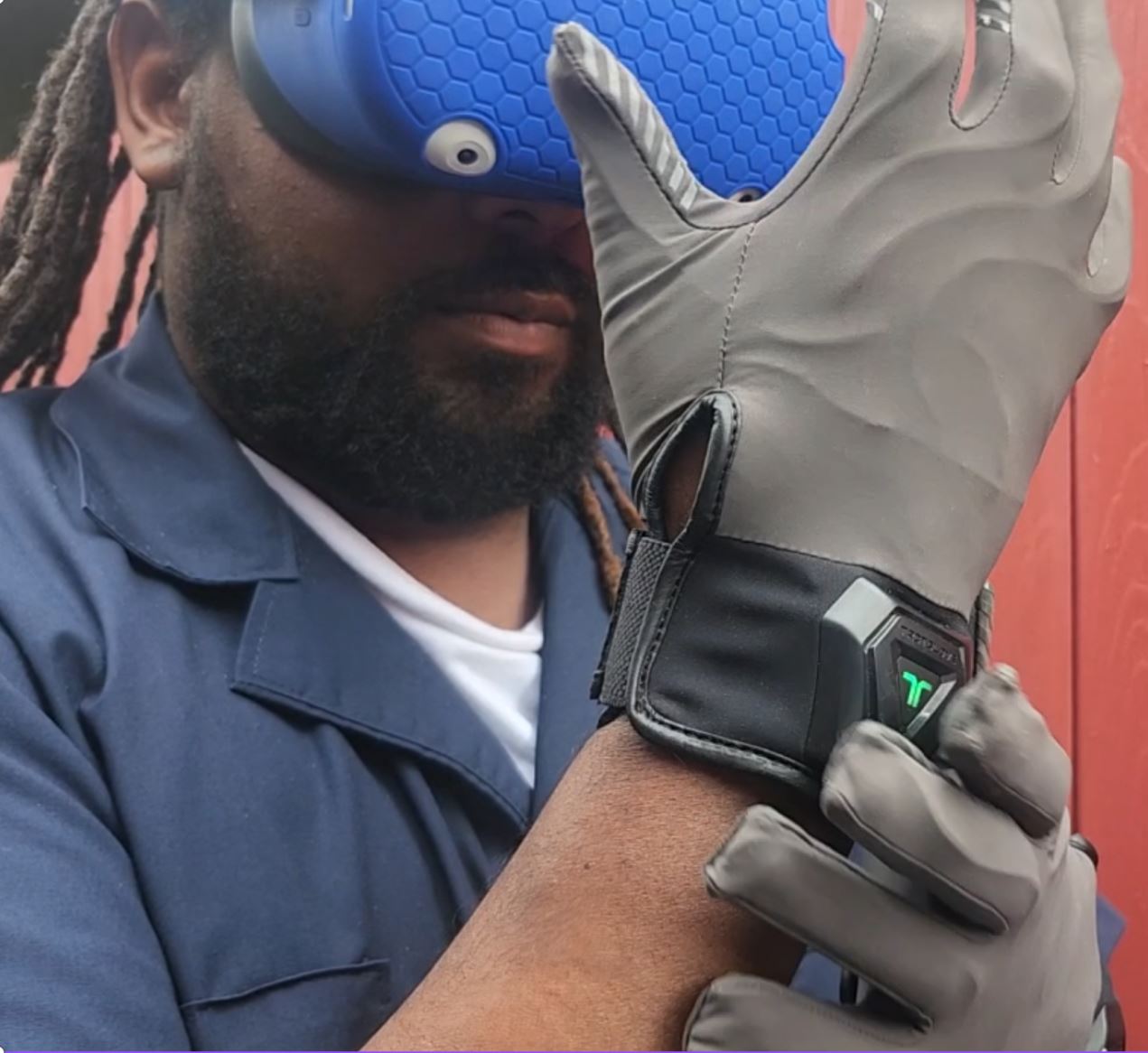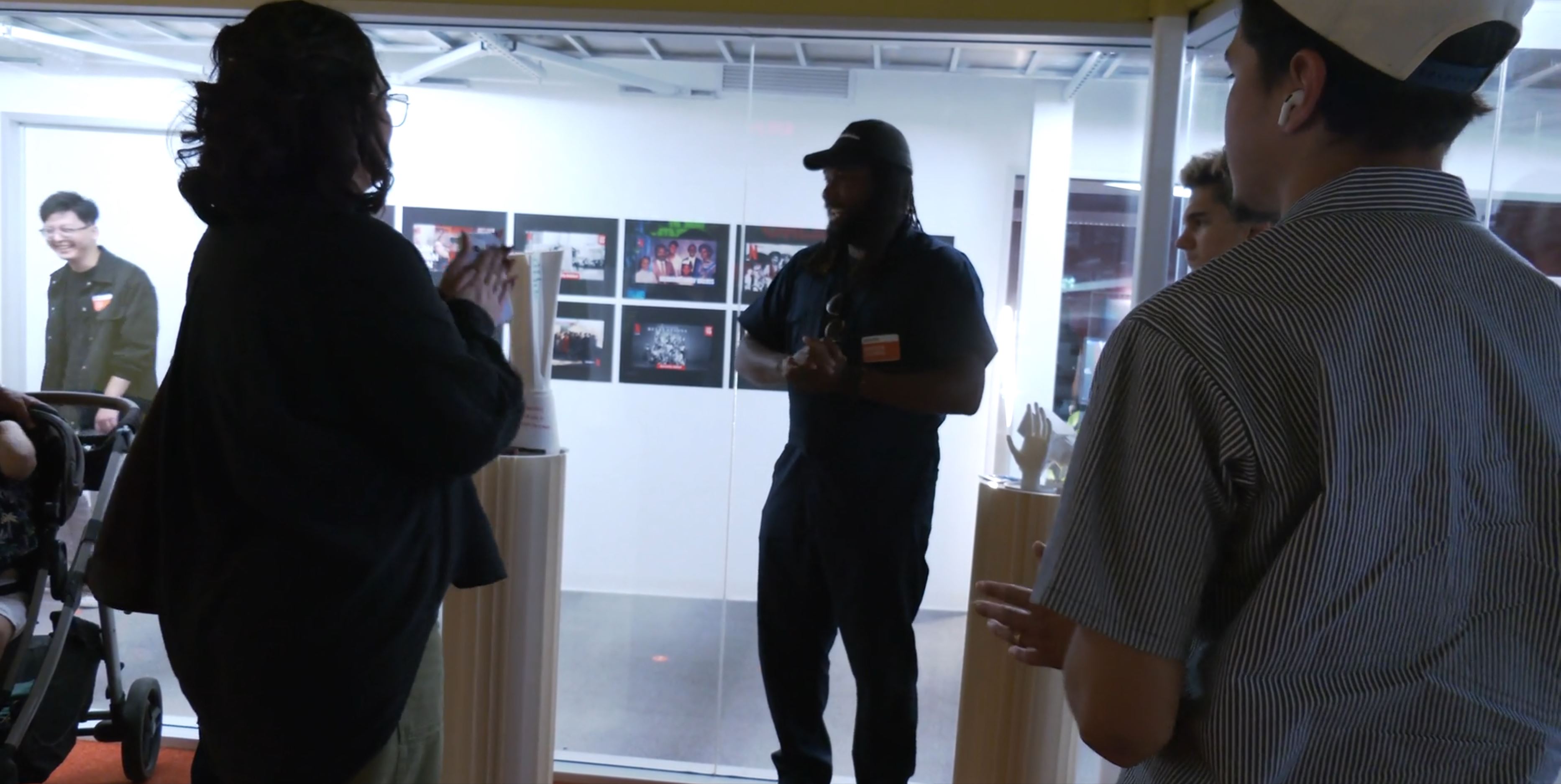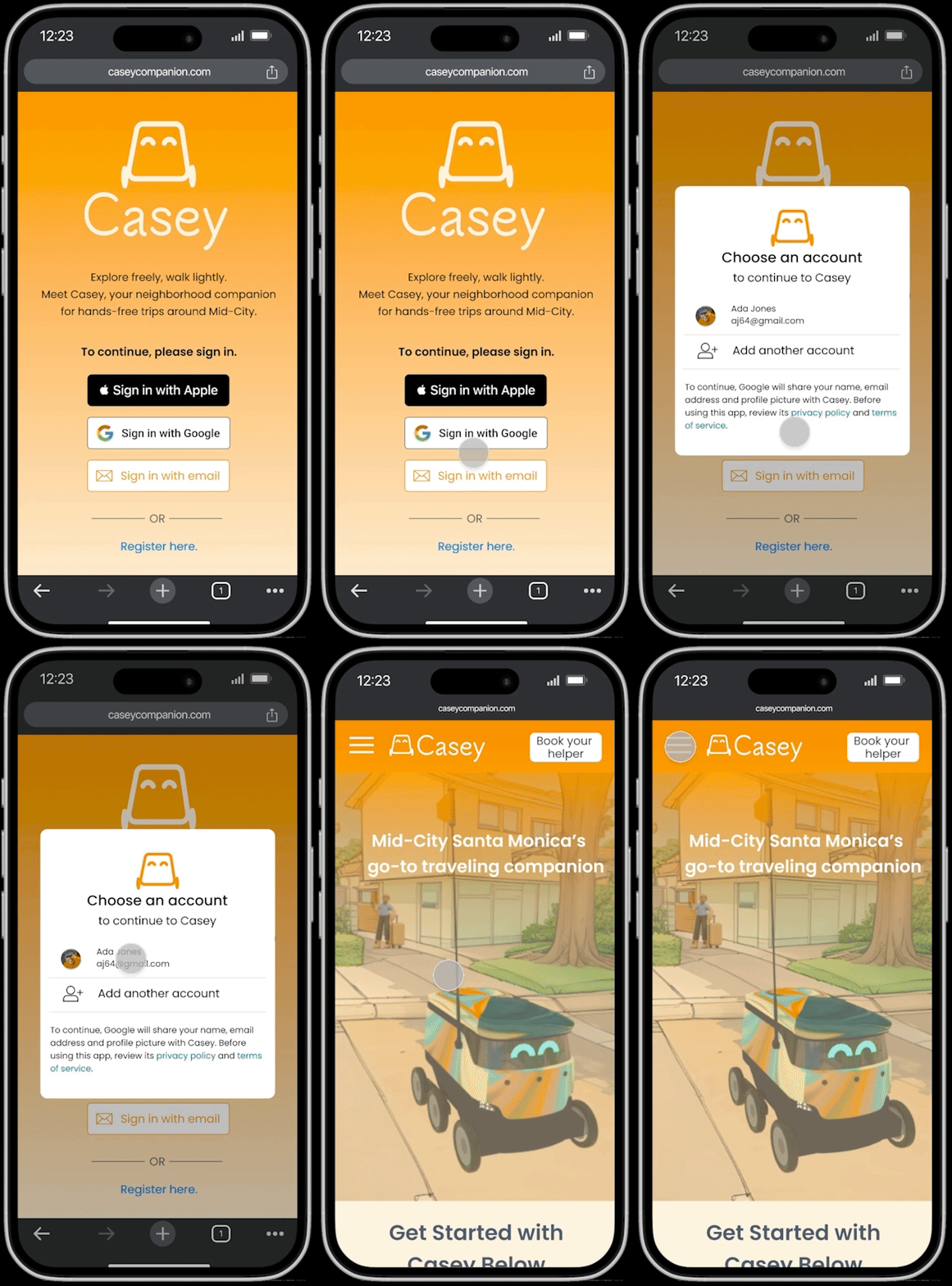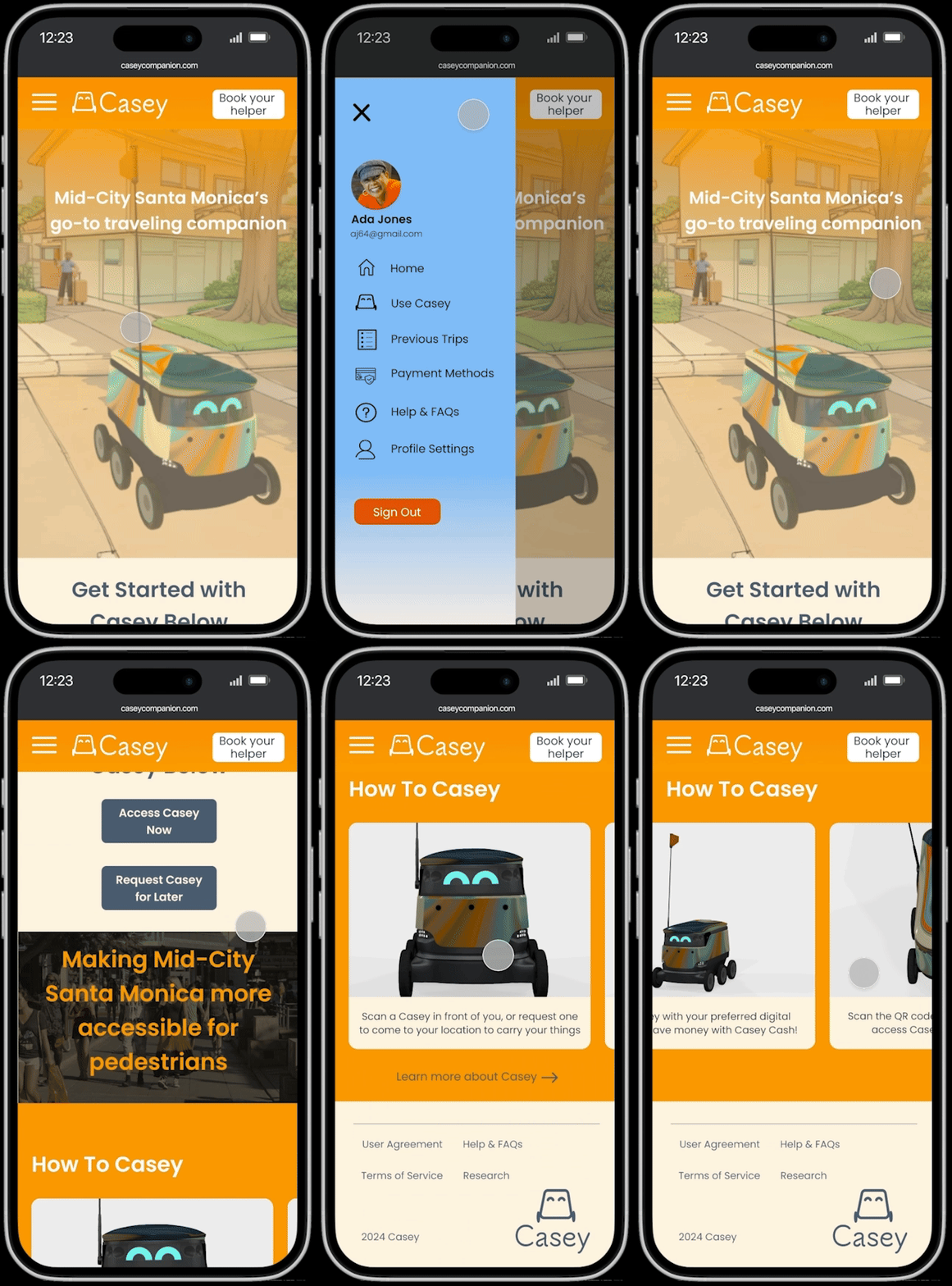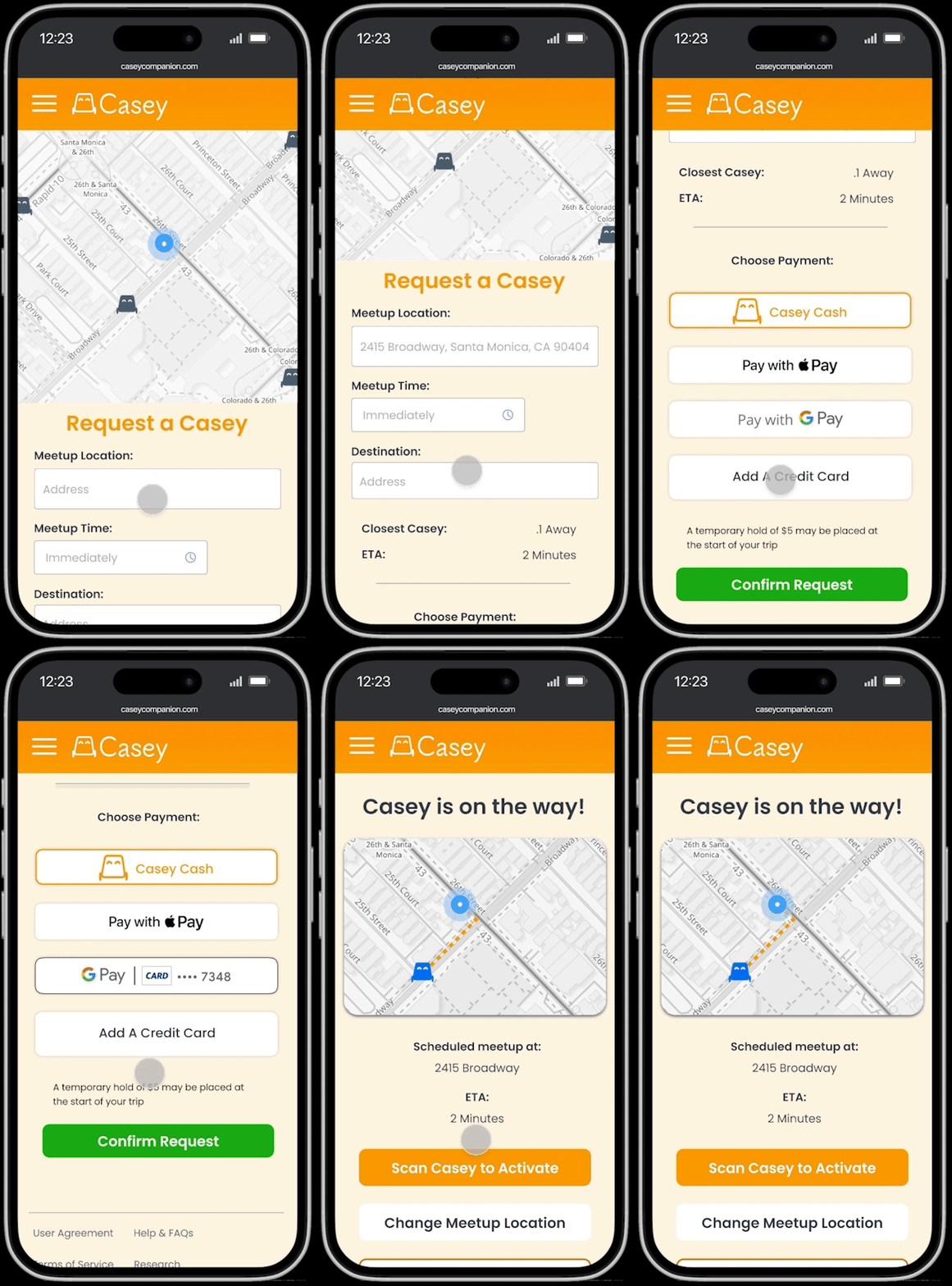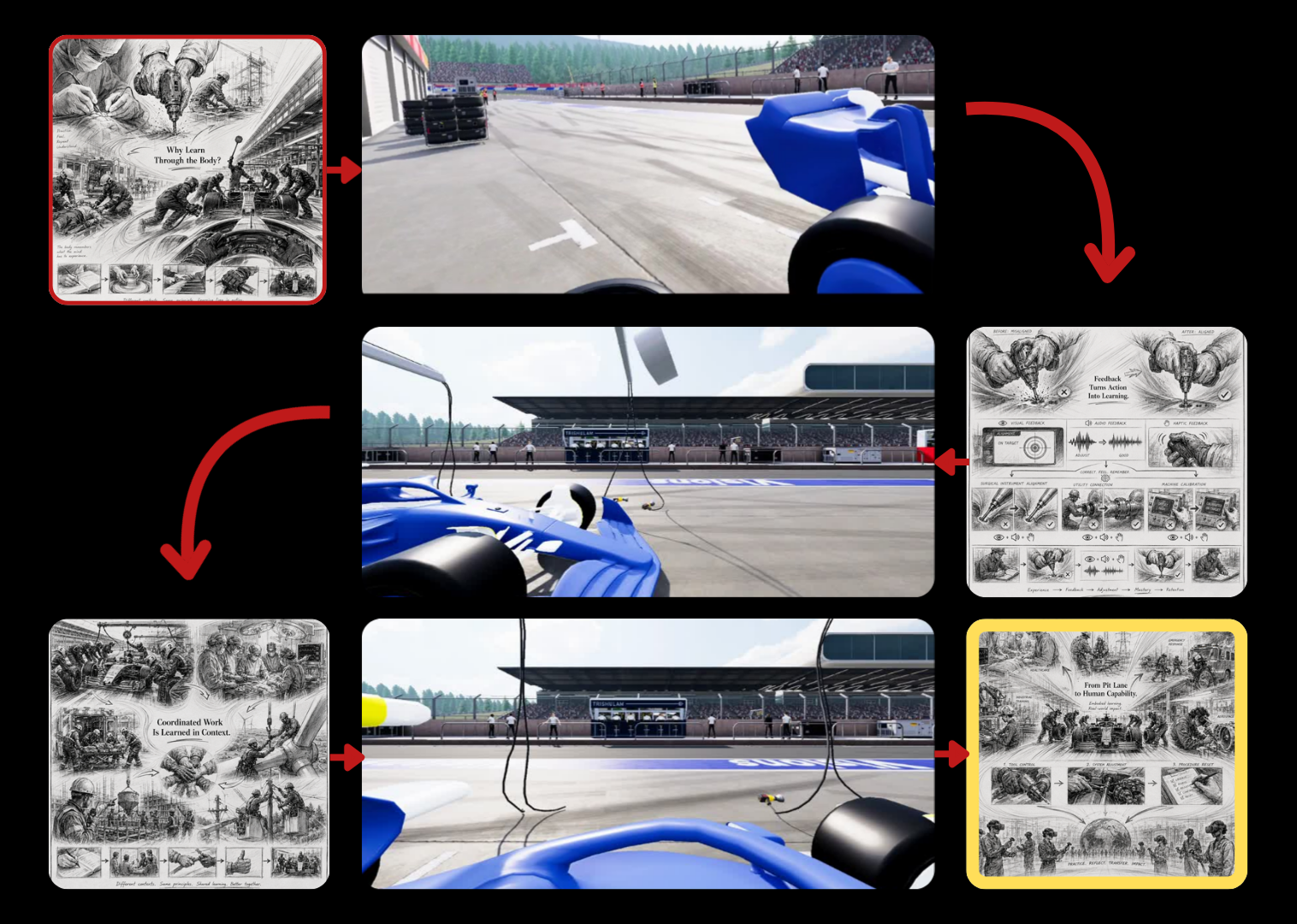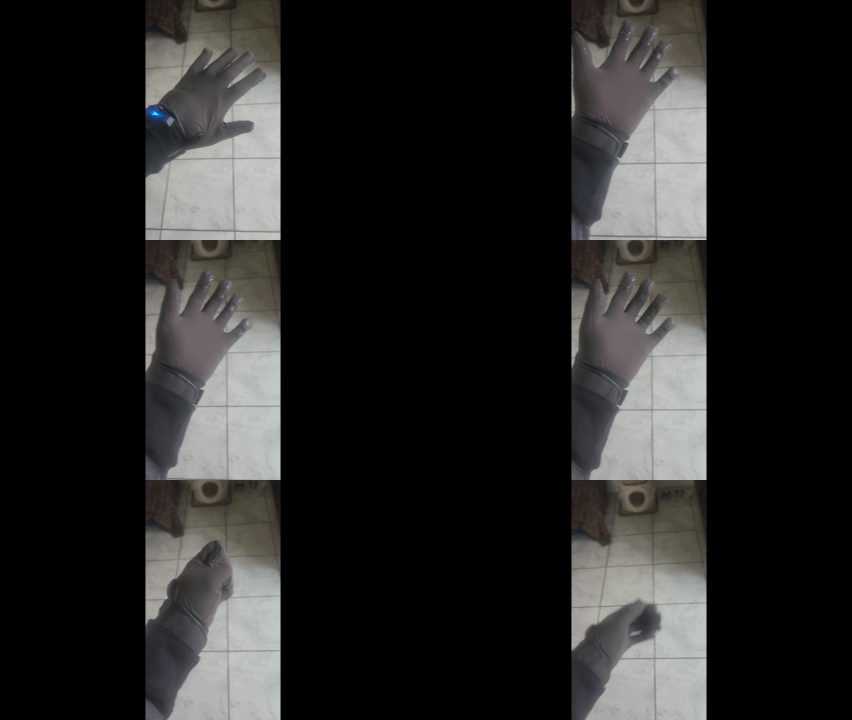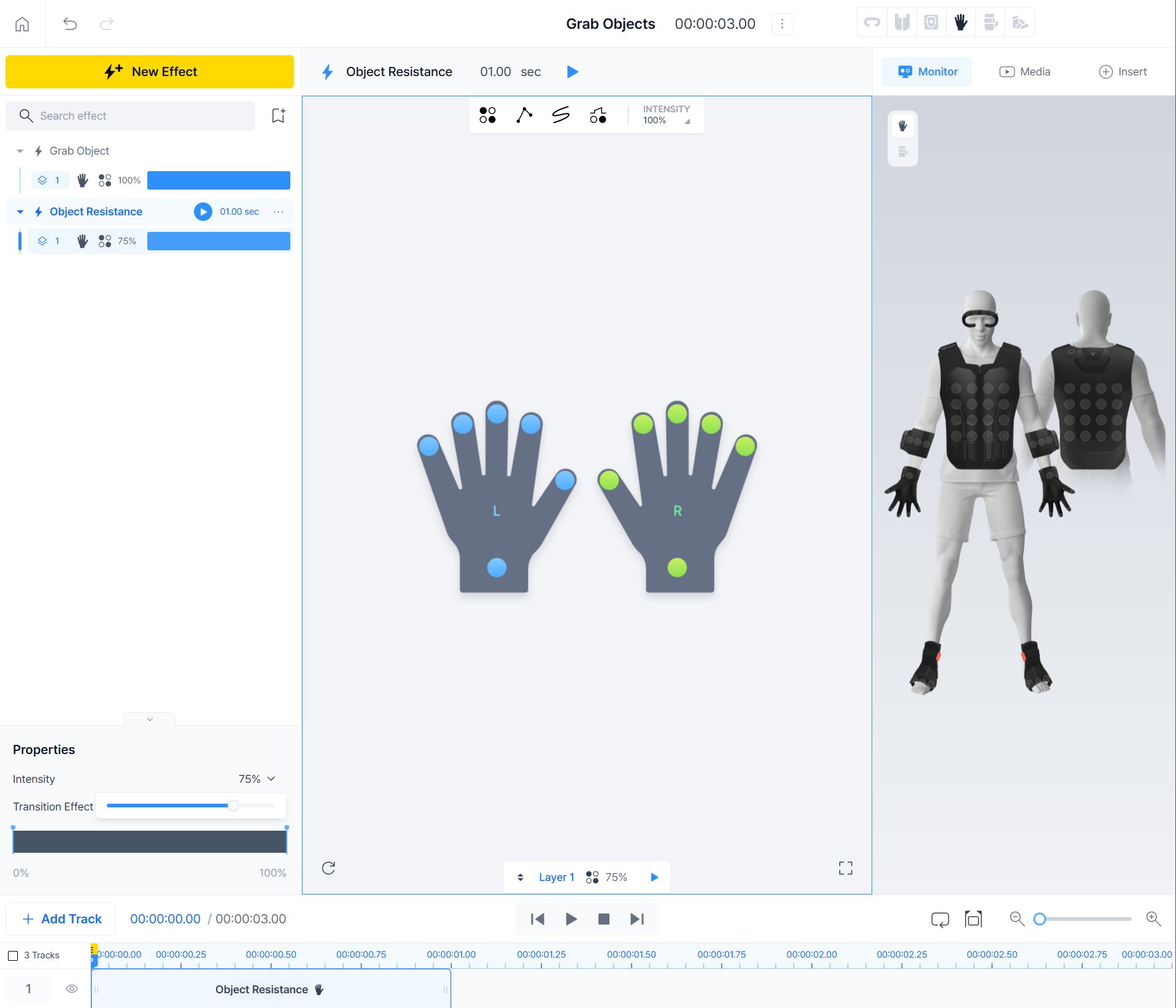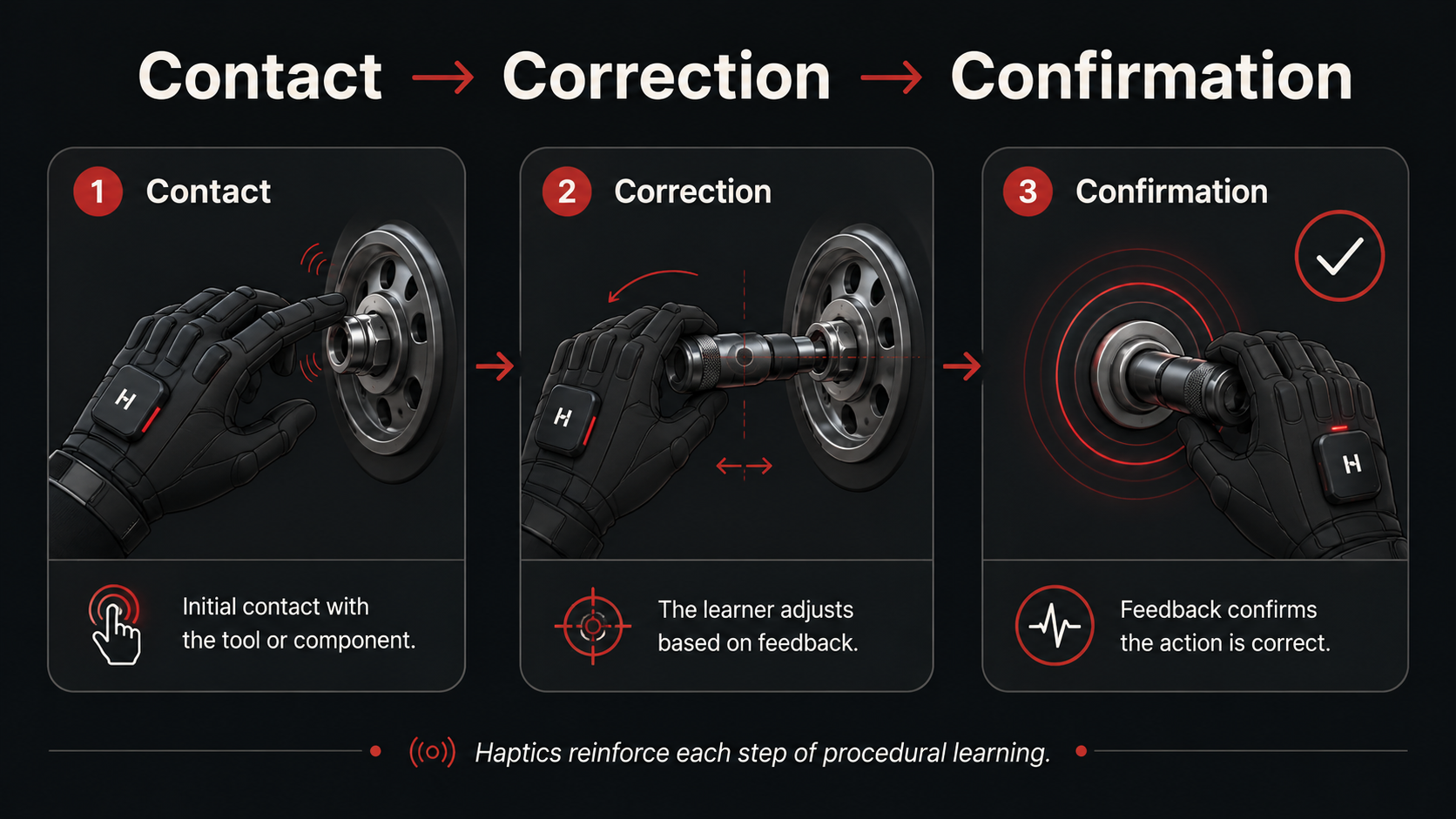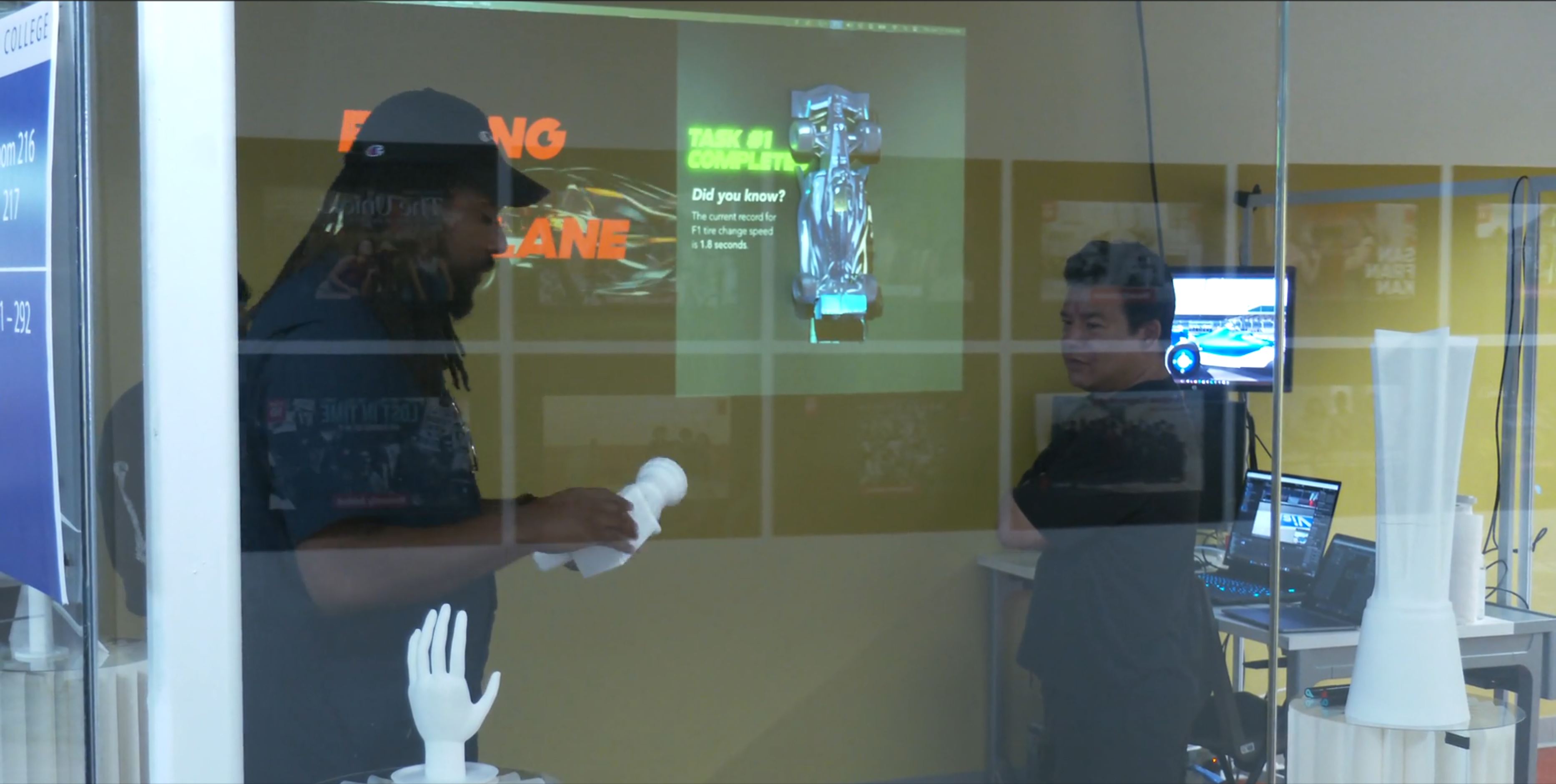

Feeling the Fastlane is a short VR education experience that asks how immersive technology can teach procedures through the body. Set within the world of Formula 1 pit crews, the project places learners inside a role-based training flow where they practice tool control, system calibration, and procedural verification through guided interactions, haptic feedback, and narrative context. The project uses F1 as a case study, but the larger goal is not motorsport fandom. It explores how VR can support high-risk, hard-to-access training environments where learners need safe repetition, immediate feedback, and a stronger sense of what correct action feels like.
Interaction Designer, XR Experience Designer
6 Months

GameStop is a large retail brand best known for video games, consoles, and collectibles, with locations across the U.S. In addition to retail, some stores host community experiences such as Trading Card Game meetups and beginner-friendly play sessions. These events rely on staff facilitation and physical setup, which makes internal training and consistency a meaningful part of the customer experience.

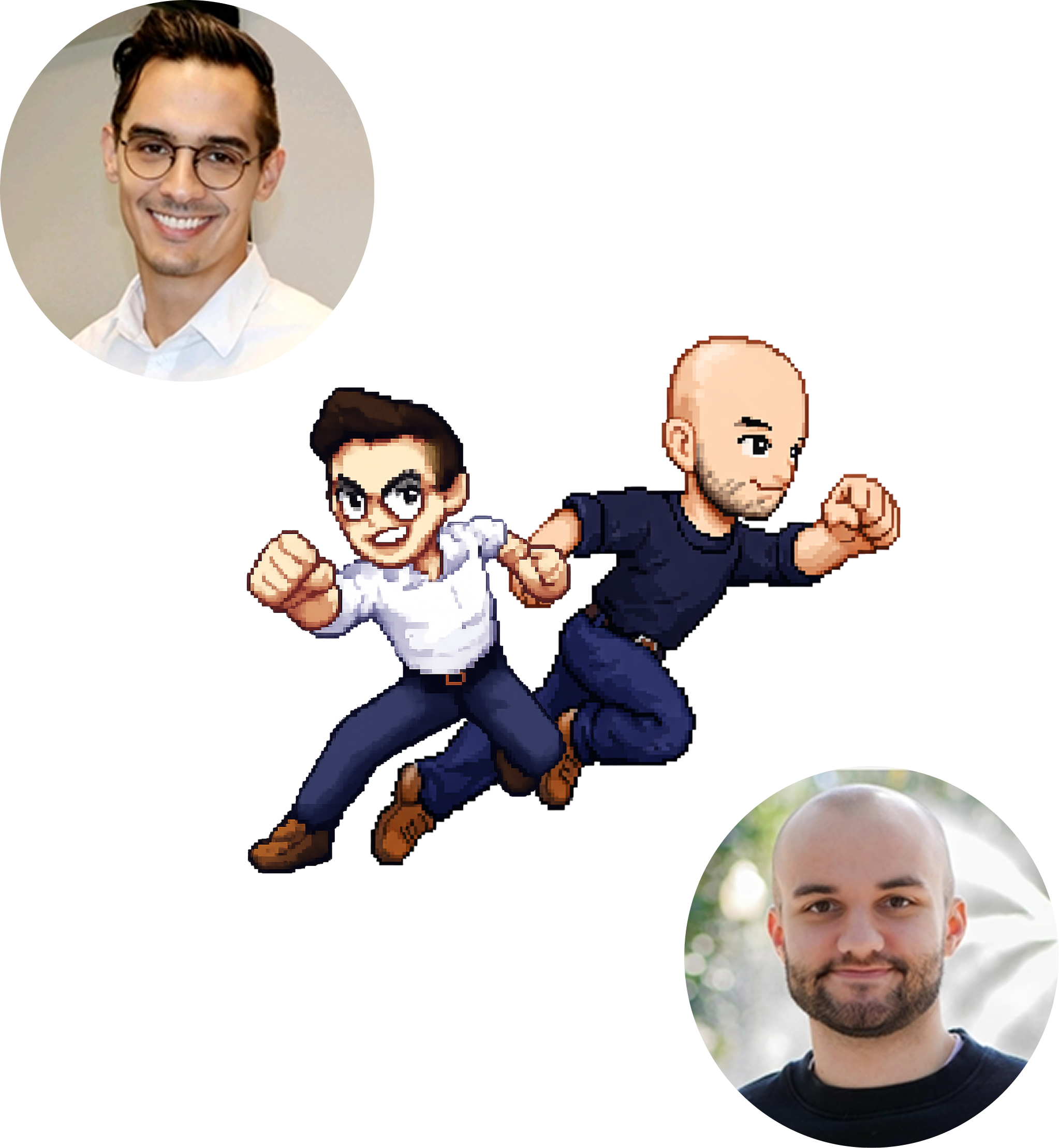
Devin connected the work to GameStop’s customer experience and brand standards, and provided ongoing guidance and feedback. As an SMC IxD alum, he also served as a helpful bridge between the academic context and real-world expectations.
Nick advised on how the concept could align with existing digital products and associate workflows.
Prototype task: Tire gun
Learning pattern: Tool use, alignment, tactile confirmation
Transfer: Surgical tools, repair tools, assembly work
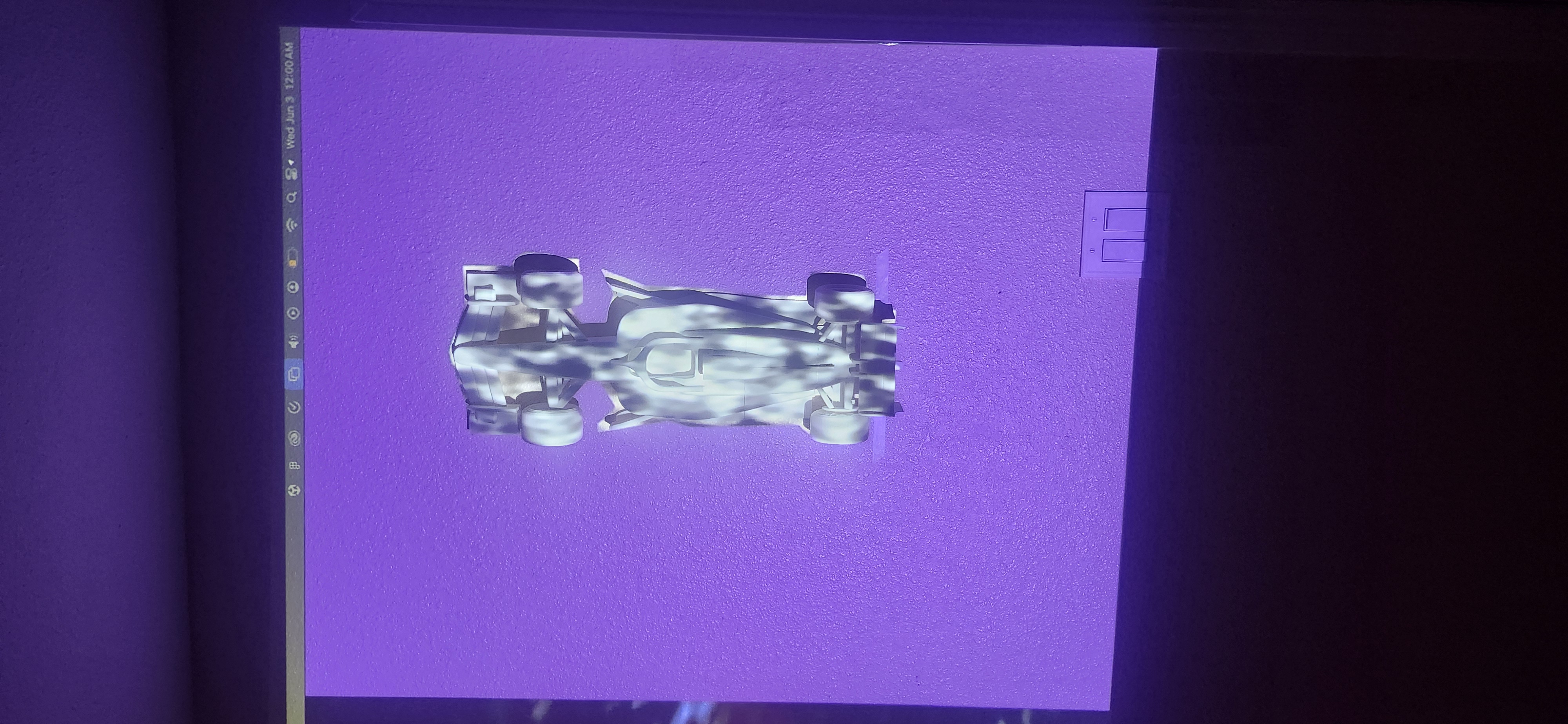
Prototype task: Front wing adjustment
Learning pattern: Small physical adjustments with system-wide impact
Transfer: Machine tuning, equipment setup, wind turbine maintenance
Prototype task: Electronics reset
Learning pattern: Sequence, status checks, completion confirmation
Transfer: Emergency checklists, diagnostics, safety protocols
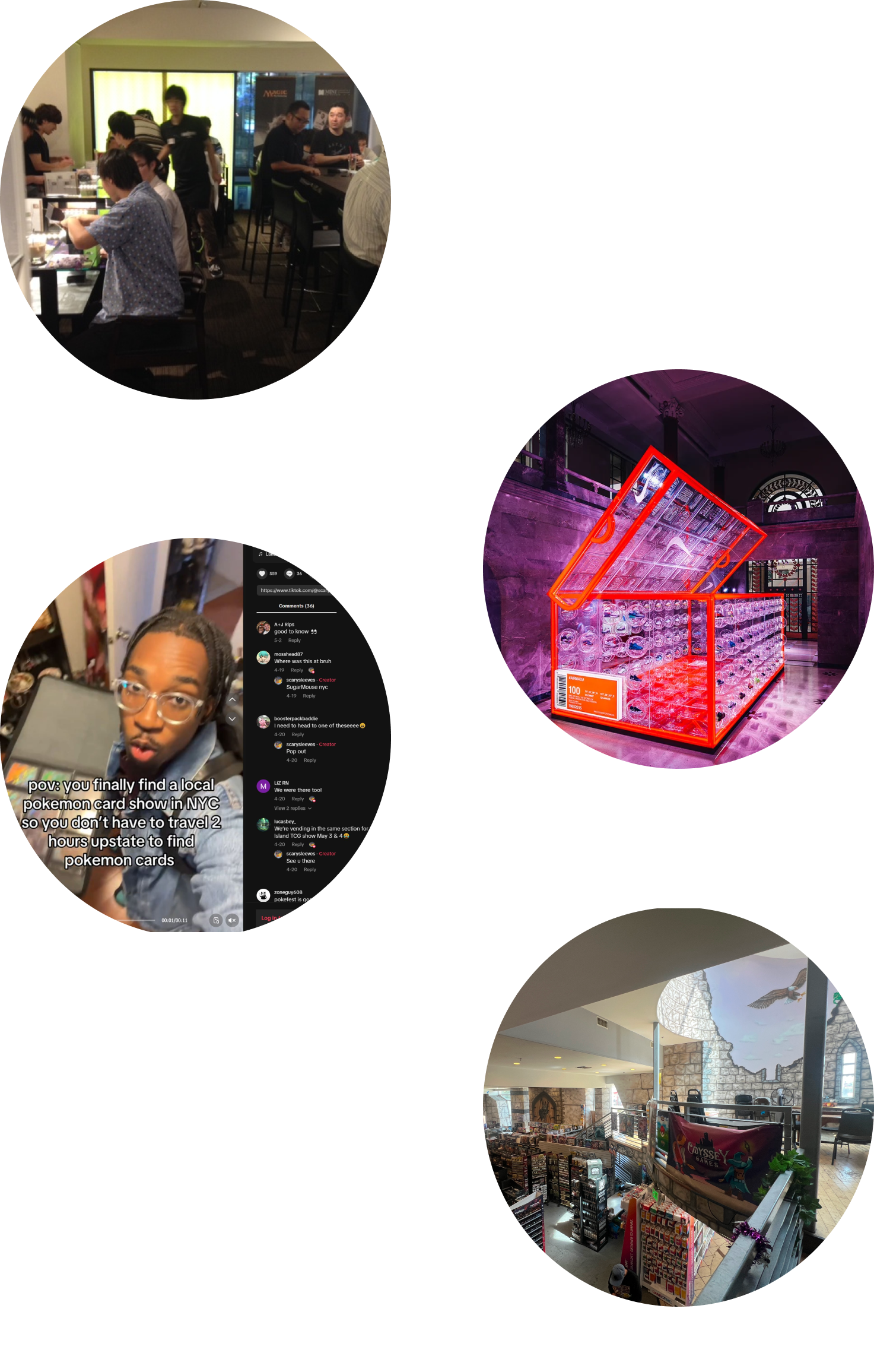
Netnography revealed a consistent tension: stores often optimize for fast transactions, while players need spaces that invite staying, learning, and returning. TCG communities grow through visibility, repetition, and shared ritual, so the environment has to make those behaviors feel natural. In hobby shops and pop-up formats, especially in Japan, that sense of “permission to stay” is often built into the space, while traditional retail layouts can unintentionally interrupt it.
To better understand that difference, we studied how physical environments shape behavior, emotion, and participation in retail and community settings. We focused on how layout, sound, lighting, and visibility influence whether people feel welcomed to linger or subtly pushed to move on. This work drew from servicescape theory, retail design research, and online observation of spaces where play, commerce, and community overlap.

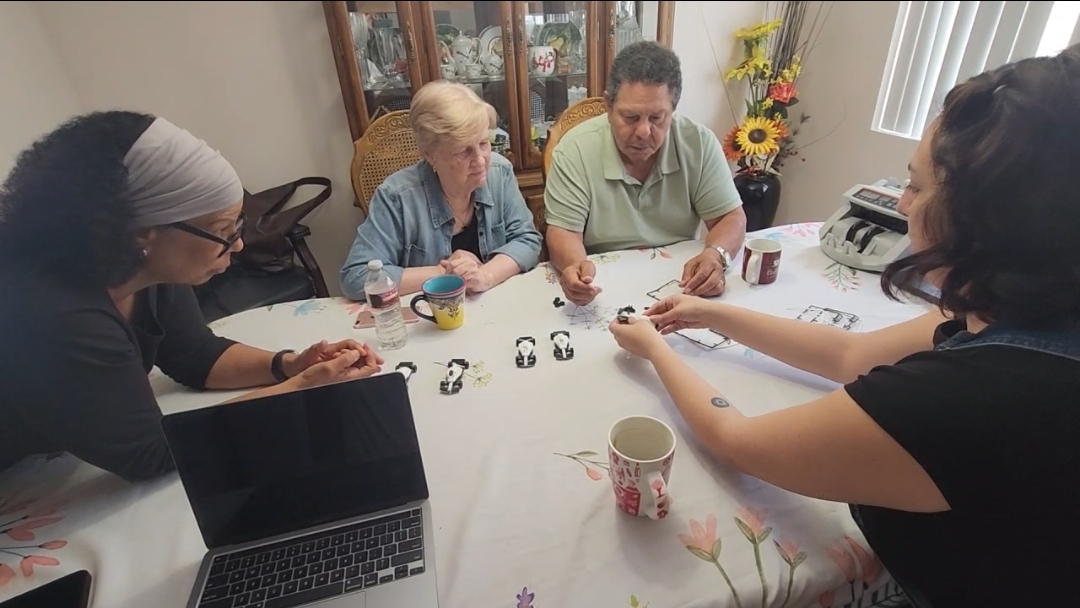
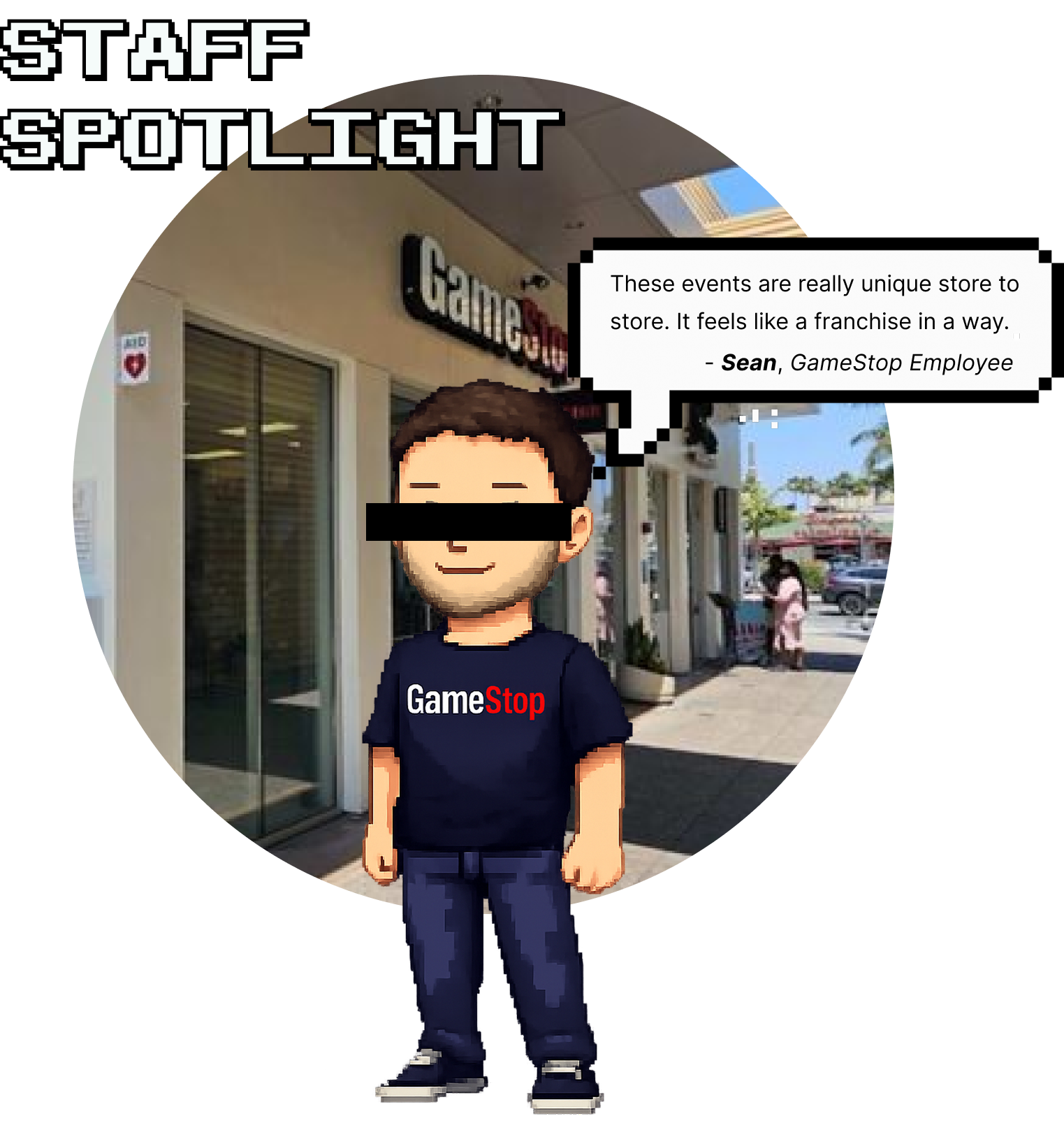
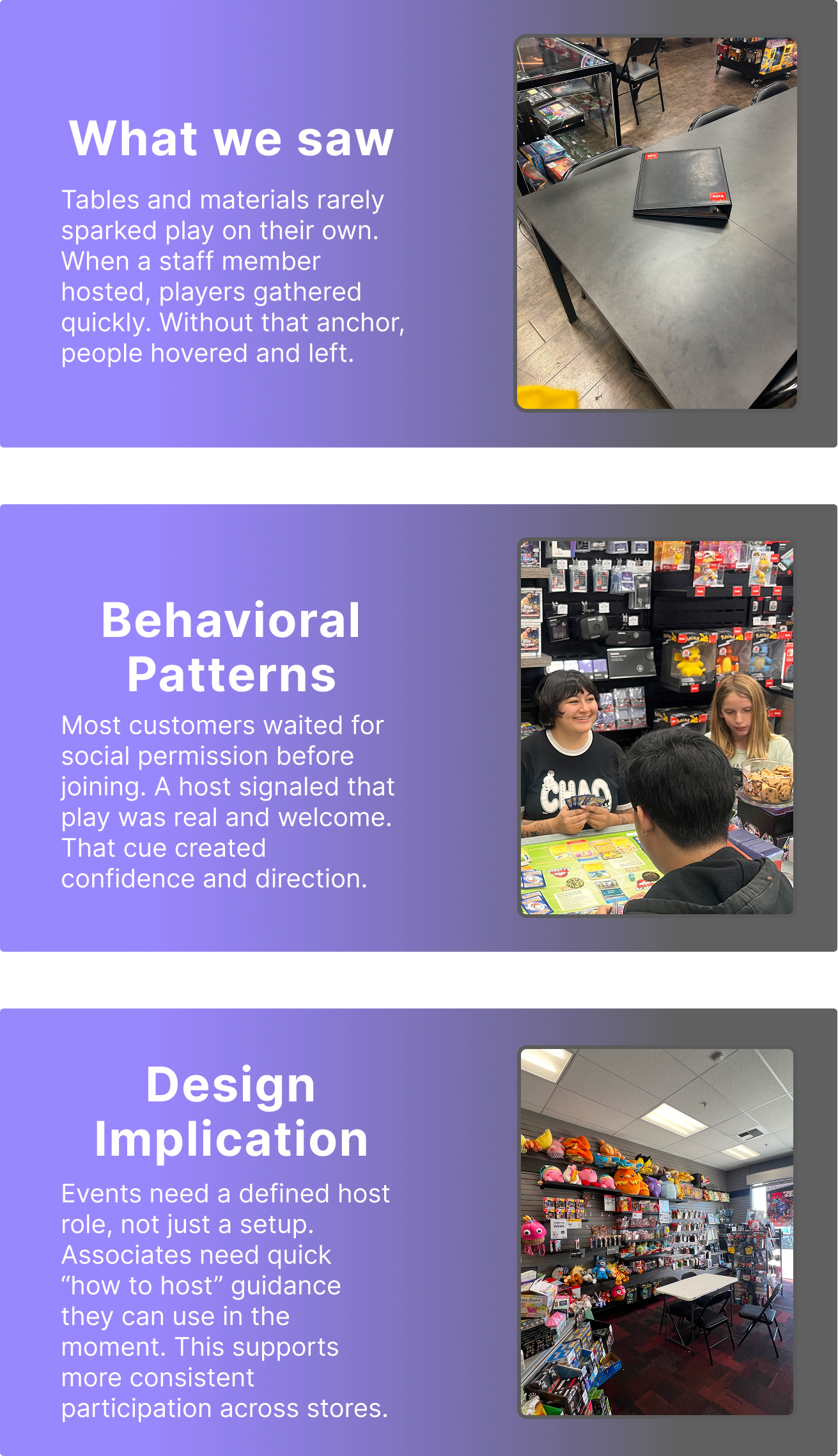
Field research showed that events often depended on employee initiative rather than a consistent system. Store space was frequently improvised, with single tables tucked into corners, shifting layouts, and unclear flow for spectators or newcomers. The atmosphere varied widely from store to store. In some locations, the event felt lively and obvious. In others, it was nearly invisible unless you already knew it was happening.
We also noticed that participation hinged less on the table setup itself and more on facilitation. Customers showed strong affinity for staff, but expressed limited attachment to the GameStop brand. Tables and materials helped, but customers only committed when a staff member clearly signaled that play was active, guided what to do next, and welcomed newcomers into the space.


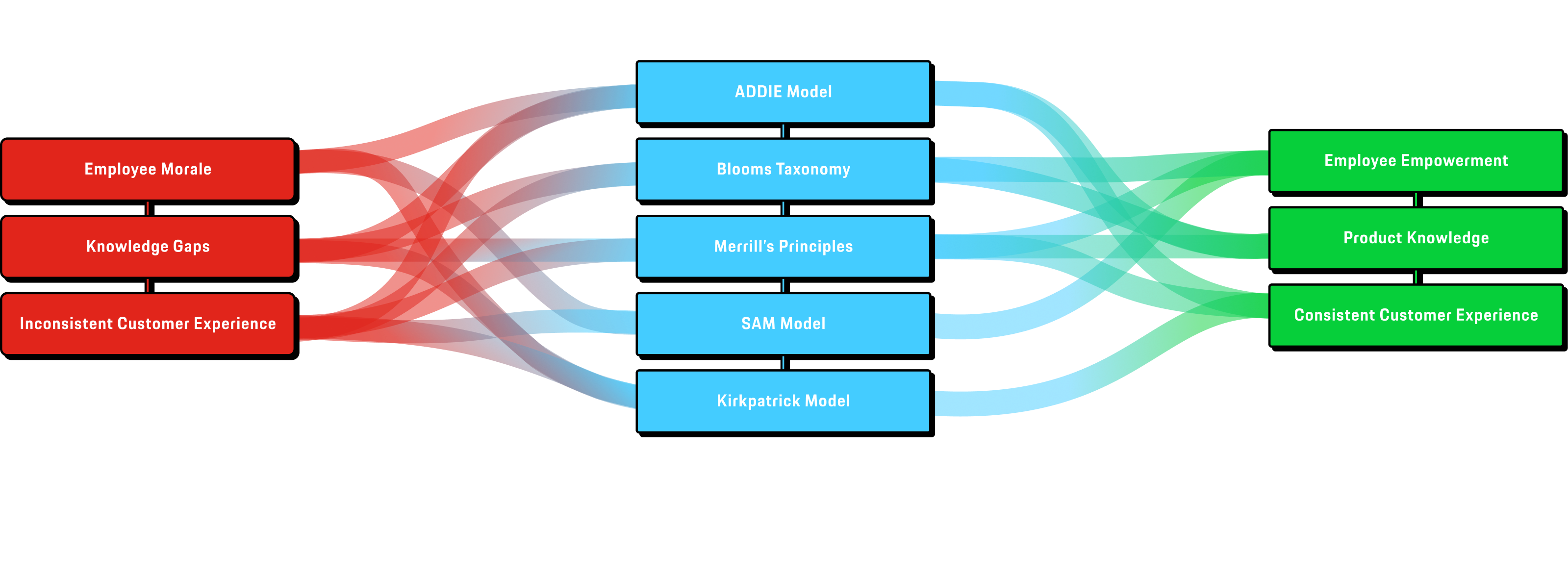
We sought out to standardize employee education for event procedures & setups so that associates of any level can run consistently great events without needing to rely solely on improvisation.
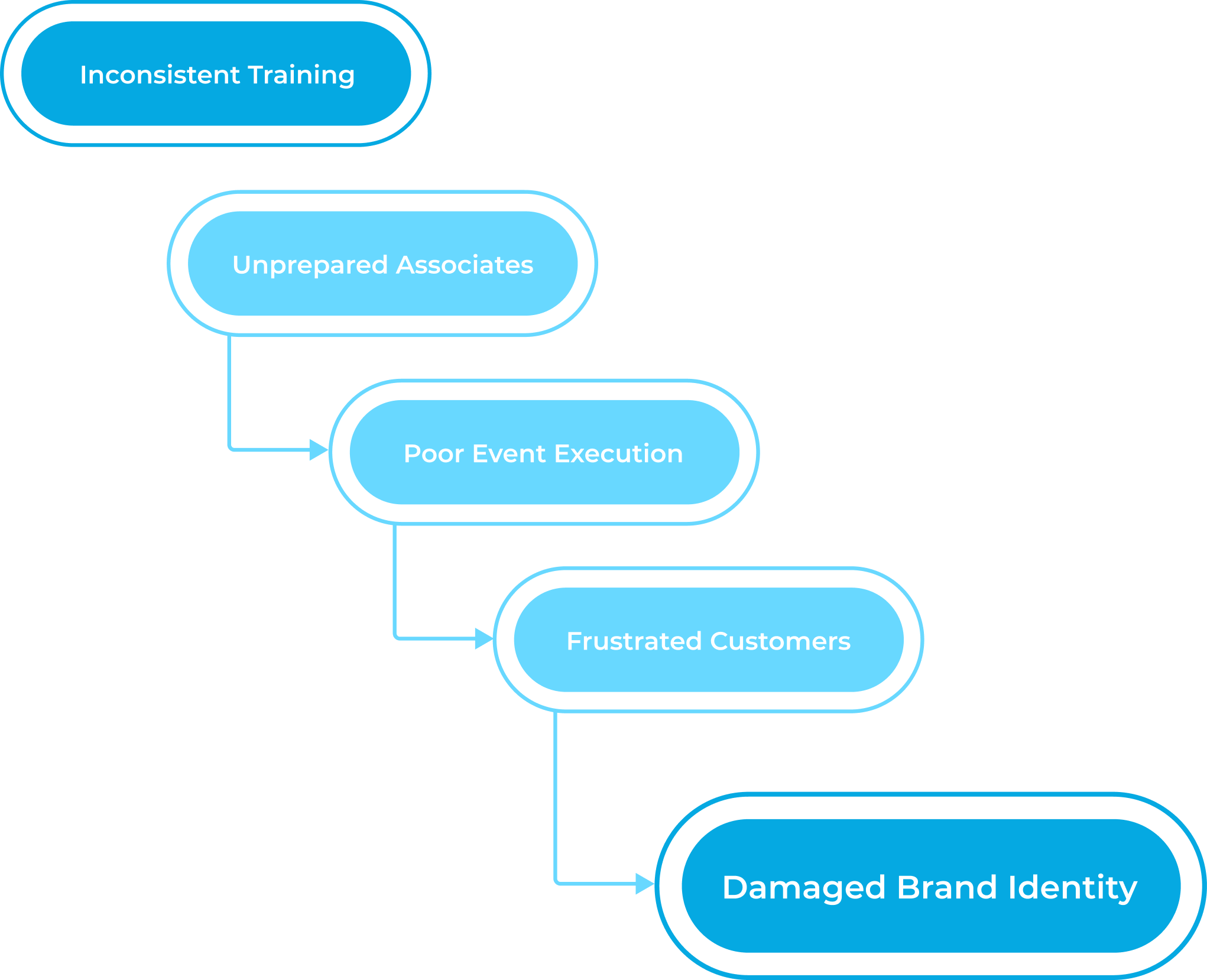
Through our research we discovered a cascading effect that ultimately taints GameStop’s brand identity.
To prevent this, we will focus on the needs of the employee to provide a systematic approach to upskilling.


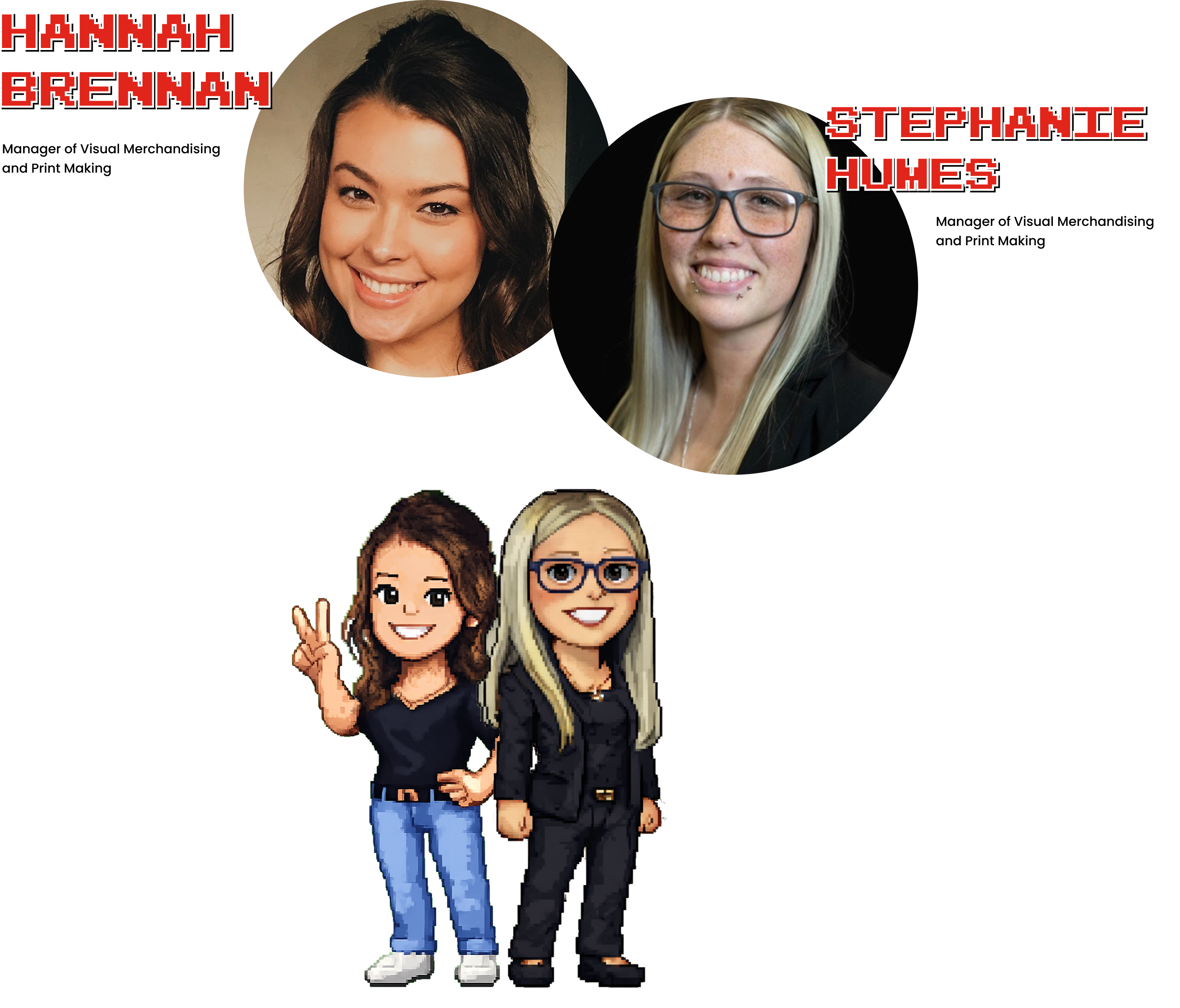
Hannah grounded our work in the realities of store space. She highlighted how much layouts vary and what can’t be moved, including ADA requirements, shelving, and signage. Her input mattered because it pushed us to design space planning that adapts to each store instead of assuming an “ideal” setup.
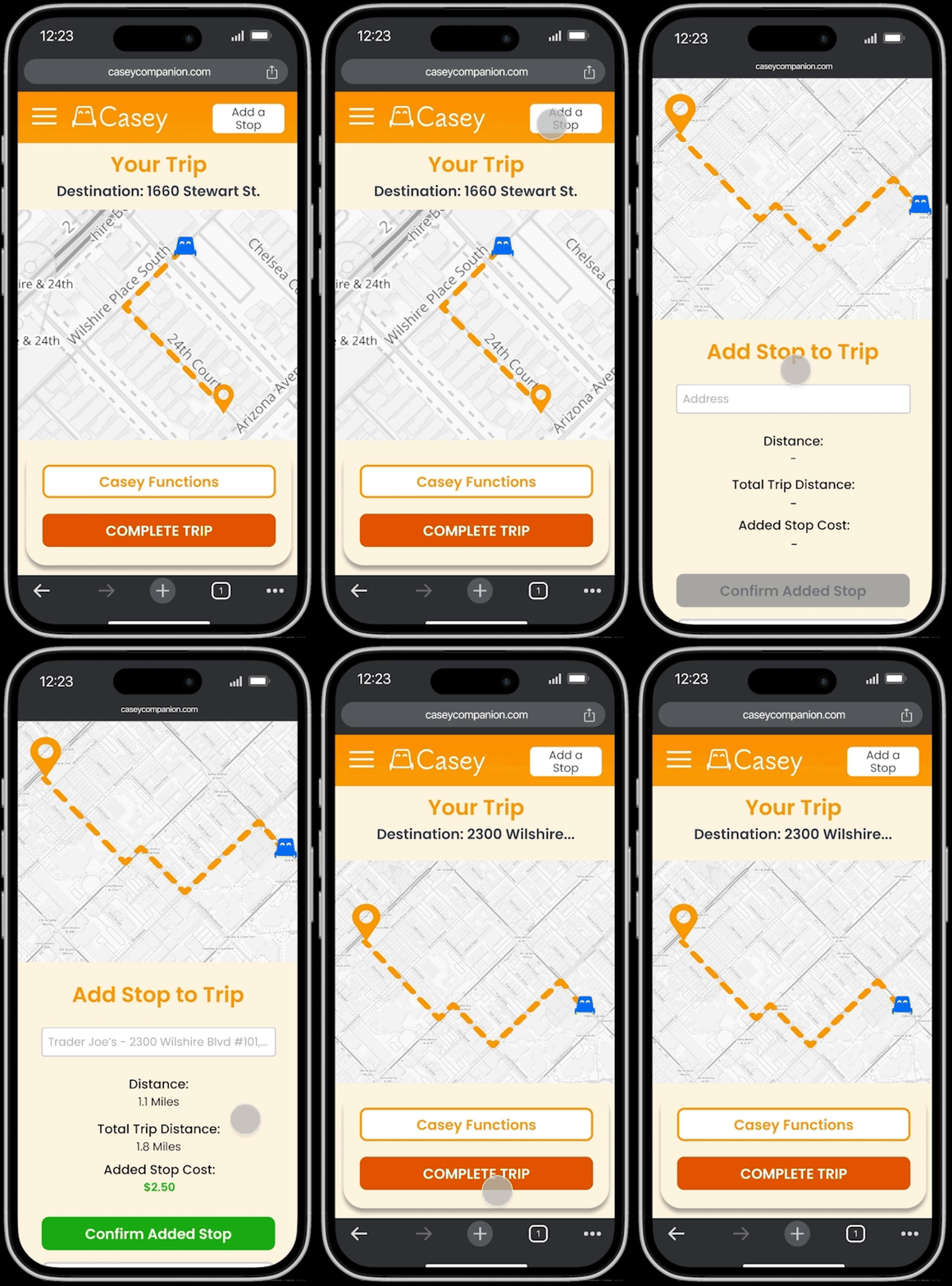
Stephanie gave us the operational view of how associates actually receive and use training. With 10+ years at GameStop, she walked us through a sample module in the employee dashboard and explained how information is passed down across stores. Her insight reinforced a key constraint for our prototype: guidance has to be easy to find, quick to absorb, and usable mid-shift.
“Our stores are One in a million...
They're all different snowflakes.” - Hannah
(on event consistency across stores)
“It depends on the manager” - Stephanie

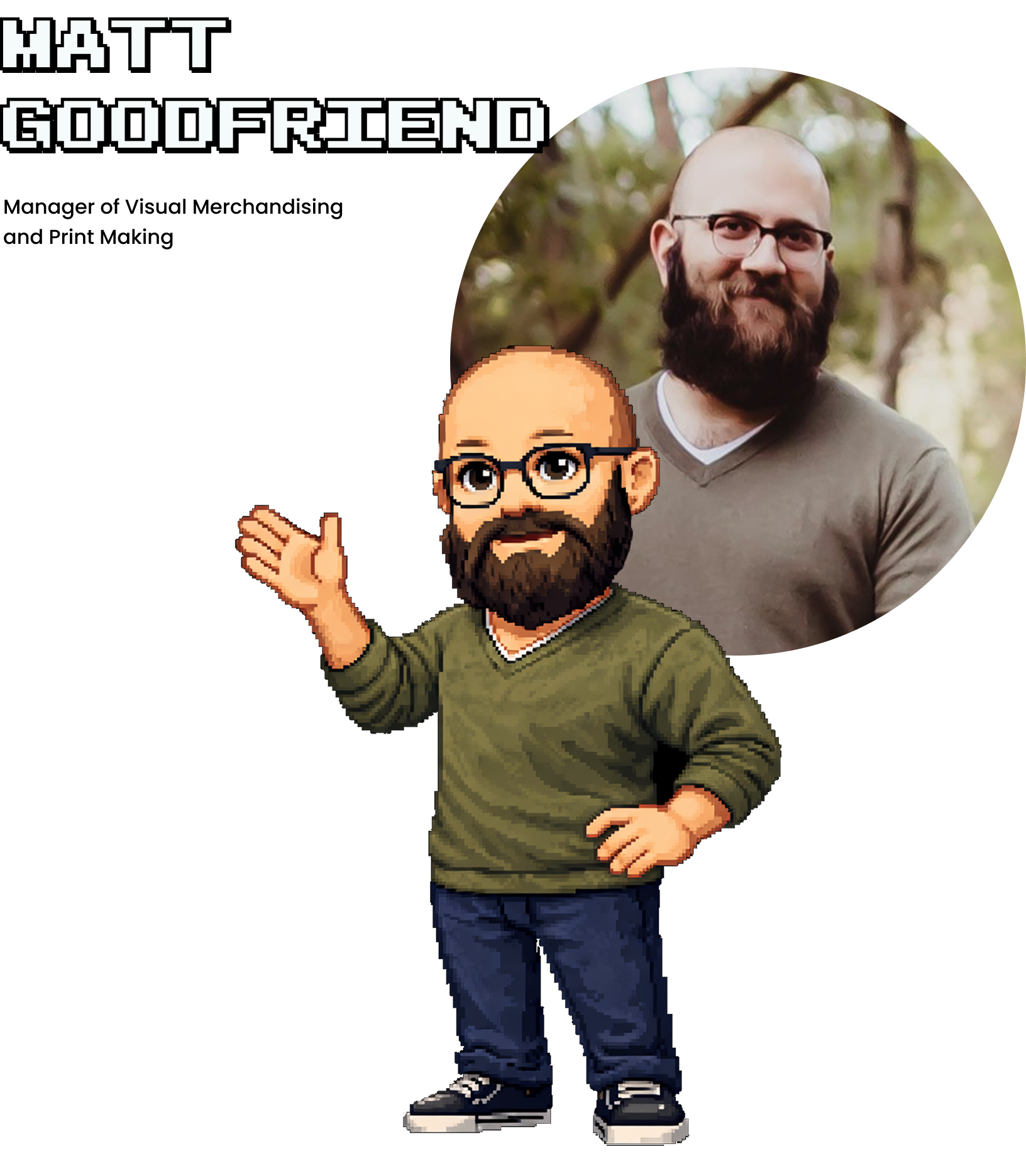
Matt helped us frame the prototype as a learning experience, not just a set of instructions. He guided how we structured the module so associates could move from understanding to action, using clear objectives, examples, and practice moments. His input mattered because it kept the training focused on real performance on shift, not just information delivery.
“Training should reflect who we are,
not just information.” - Matt

Standardizing instruction for event procedures & setups so that GS employees can run consistently great events without needing to rely solely on improvisation
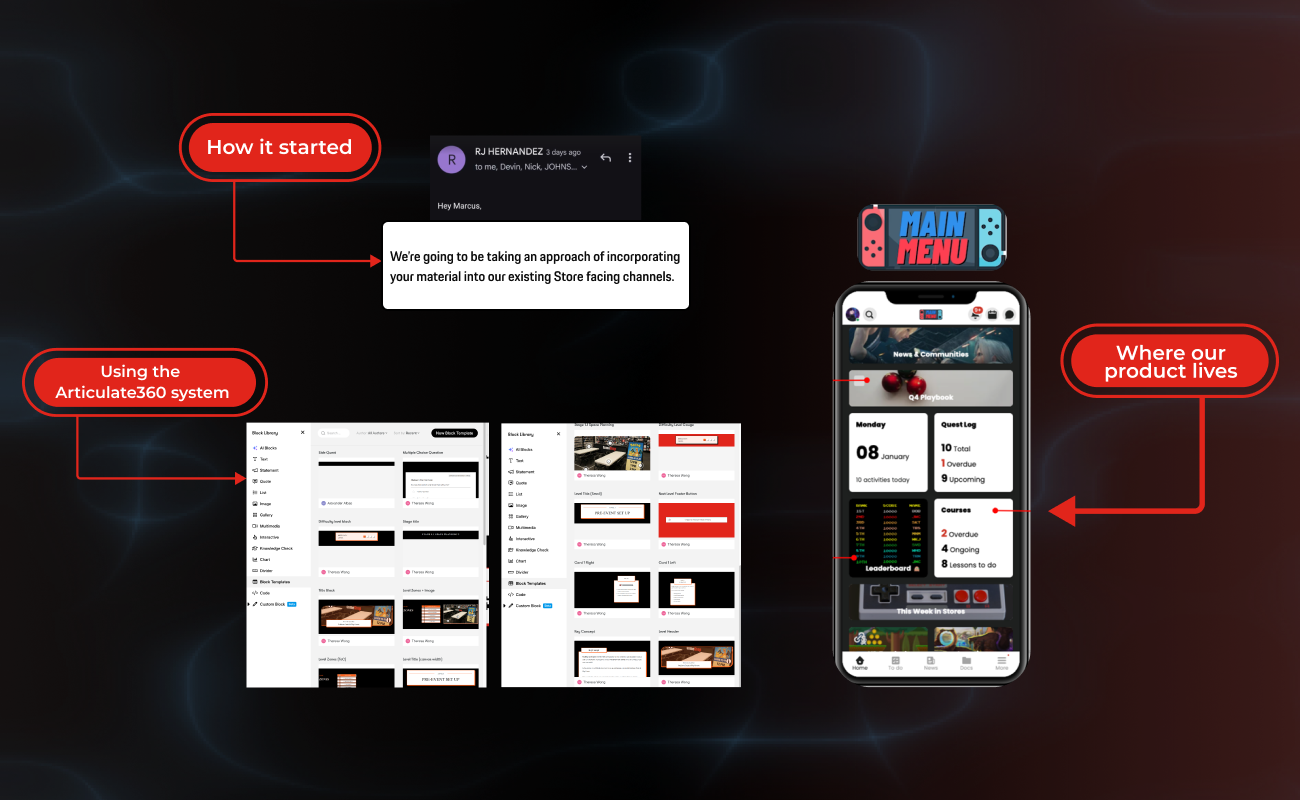
We began by drafting the training experience in Figma. That early prototype helped us quickly test the structure, tone, and flow before committing to a full build. During review, we were told the draft was strong enough that GameStop planned to include most of it in their internal education testing. That feedback shifted the stakes for us. It also made it clear that if we wanted the work to be usable inside their ecosystem, we needed to build it in the format their teams actually prefer.
That is what pushed us to move from a Figma draft into Articulate360. We treated the transition as part of the design work, not just a handoff. We adapted our screens into a real module build, tightened pacing, and leaned into interaction patterns that Articulate supports well. Learning a new tool mid-project was a challenge, but it made the prototype feel more realistic and closer to how training could live within Main Menu.

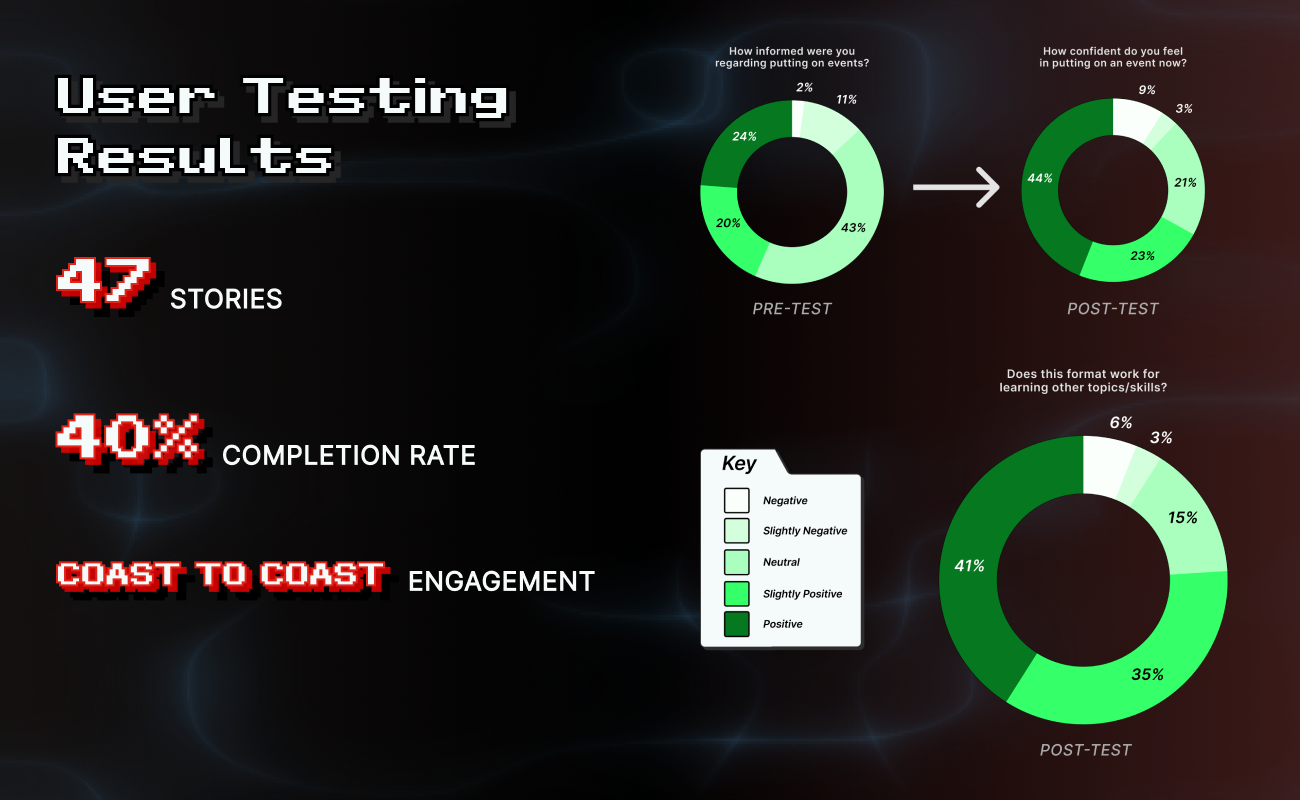
Testing occurred over the span of three days at a 40% completion rate (the norm for GS is 45% in two weeks), in three regions. A total of 47 associates participated in the test.
The results showed clear confidence growth after associates explored the Employee Playbook module, with sentiment shifting more positive overall. A meaningful portion (~45%) still stayed neutral, which signaled the need for more personalized and hands-on support in future iterations of the module.

Feeling the Fastlane is a short VR education experience that asks how immersive technology can teach procedures through the body. Set within the world of Formula 1 pit crews, the project places learners inside a role-based training flow where they practice tool control, system calibration, and procedural verification through guided interactions, haptic feedback, and narrative context. The project uses F1 as a case study, but the larger goal is not motorsport fandom. It explores how VR can support high-risk, hard-to-access training environments where learners need safe repetition, immediate feedback, and a stronger sense of what correct action feels like.
Interaction Designer, XR Experience Designer
6 Months
design a game that tests players abilities to navigate cross-cultural communication through different scenarios?
To further solidify our understanding of intercultural communication and how games could possibly be used as a medium for addressing the friction that it caused in a more focused product, we underwent using research methods such as: mind mapping, insight sorting, and from-to exploration.
With the team also performing competitive analyses on games (the most informative of which will be mentioned below), we were also able to develop a matrix that compared how games created decision-experiences to more clearly understand how we wanted to represent Bridge to Kultur (as well as discover how it would play).
At the heart of Bridge to Kultur is a world fractured by history, scarcity, and cultural divergence. Rather than casting players as conquerors or traders, the narrative invites them to step into the roles of diplomats. Individuals tasked with navigating trust, survival, and identity in a land on the brink of collapse.
Each of the four nations—Fire, Water, Earth, and Air—possesses its own worldview, aesthetic, and moral compass. Through branching scenarios, faction-based dilemmas, and evolving trust dynamics, the narrative challenges players not only to survive a looming Calamity, but to wrestle with the social and political costs of doing so. This isn't just a story players observe, but one that they co-author with every scenario they encounter, every alliance they build, and every bridge they dare—or refuse—to cross.
Creating the mechanics for Bridge to Kultur meant balancing narrative depth with strategic clarity. From the start, our goal was to design a system that encouraged meaningful choices, personal agency, and diplomatic tension—while staying intuitive enough to support both analog and digital components. The mechanics evolved through multiple iterations, each one bringing us closer to a structure that supports individual storytelling within a shared world. As someone who has been playing games for as long as they can remember, having the opportunity to design the mechanics and flow of the game was an exciting and complex challenge for me.
Prototype task: Tire gun
Learning pattern: Tool use, alignment, tactile confirmation
Transfer: Surgical tools, repair tools, assembly work
Prototype task: Front wing adjustment
Learning pattern: Small physical adjustments with system-wide impact
Transfer: Machine tuning, equipment setup, wind turbine maintenance
Prototype task: Electronics reset
Learning pattern: Sequence, status checks, completion confirmation
Transfer: Emergency checklists, diagnostics, safety protocols


.png)

.png)

.png)



Feeling the Fastlane is a short VR education experience that asks how immersive technology can teach procedures through the body. Set within the world of Formula 1 pit crews, the project places learners inside a role-based training flow where they practice tool control, system calibration, and procedural verification through guided interactions, haptic feedback, and narrative context. The project uses F1 as a case study, but the larger goal is not motorsport fandom. It explores how VR can support high-risk, hard-to-access training environments where learners need safe repetition, immediate feedback, and a stronger sense of what correct action feels like.
Interaction Designer, XR Experience Designer
6 Months
design a game that tests players abilities to navigate cross-cultural communication through different scenarios?
To further solidify our understanding of intercultural communication and how games could possibly be used as a medium for addressing the friction that it caused in a more focused product, we underwent using research methods such as: mind mapping, insight sorting, and from-to exploration.
With the team also performing competitive analyses on games (the most informative of which will be mentioned below), we were also able to develop a matrix that compared how games created decision-experiences to more clearly understand how we wanted to represent Bridge to Kultur (as well as discover how it would play).
At the heart of Bridge to Kultur is a world fractured by history, scarcity, and cultural divergence. Rather than casting players as conquerors or traders, the narrative invites them to step into the roles of diplomats. Individuals tasked with navigating trust, survival, and identity in a land on the brink of collapse.
Each of the four nations—Fire, Water, Earth, and Air—possesses its own worldview, aesthetic, and moral compass. Through branching scenarios, faction-based dilemmas, and evolving trust dynamics, the narrative challenges players not only to survive a looming Calamity, but to wrestle with the social and political costs of doing so. This isn't just a story players observe, but one that they co-author with every scenario they encounter, every alliance they build, and every bridge they dare—or refuse—to cross.
Creating the mechanics for Bridge to Kultur meant balancing narrative depth with strategic clarity. From the start, our goal was to design a system that encouraged meaningful choices, personal agency, and diplomatic tension—while staying intuitive enough to support both analog and digital components. The mechanics evolved through multiple iterations, each one bringing us closer to a structure that supports individual storytelling within a shared world. As someone who has been playing games for as long as they can remember, having the opportunity to design the mechanics and flow of the game was an exciting and complex challenge for me.
Prototype task: Tire gun
Learning pattern: Tool use, alignment, tactile confirmation
Transfer: Surgical tools, repair tools, assembly work
Prototype task: Front wing adjustment
Learning pattern: Small physical adjustments with system-wide impact
Transfer: Machine tuning, equipment setup, wind turbine maintenance
Prototype task: Electronics reset
Learning pattern: Sequence, status checks, completion confirmation
Transfer: Emergency checklists, diagnostics, safety protocols


.png)

.png)

.png)
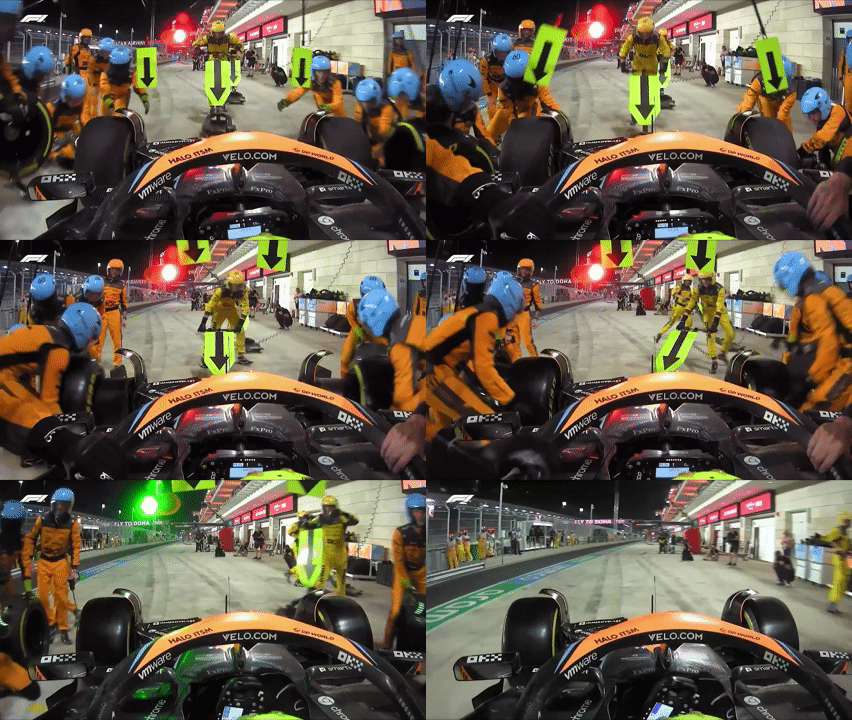


Feeling the Fastlane is a short VR education experience that asks how immersive technology can teach procedures through the body. Set within the world of Formula 1 pit crews, the project places learners inside a role-based training flow where they practice tool control, system calibration, and procedural verification through guided interactions, haptic feedback, and narrative context. The project uses F1 as a case study, but the larger goal is not motorsport fandom. It explores how VR can support high-risk, hard-to-access training environments where learners need safe repetition, immediate feedback, and a stronger sense of what correct action feels like.
Interaction Designer, XR Experience Designer
6 Months
design a game that tests players abilities to navigate cross-cultural communication through different scenarios?
To further solidify our understanding of intercultural communication and how games could possibly be used as a medium for addressing the friction that it caused in a more focused product, we underwent using research methods such as: mind mapping, insight sorting, and from-to exploration.
With the team also performing competitive analyses on games (the most informative of which will be mentioned below), we were also able to develop a matrix that compared how games created decision-experiences to more clearly understand how we wanted to represent Bridge to Kultur (as well as discover how it would play).
At the heart of Bridge to Kultur is a world fractured by history, scarcity, and cultural divergence. Rather than casting players as conquerors or traders, the narrative invites them to step into the roles of diplomats. Individuals tasked with navigating trust, survival, and identity in a land on the brink of collapse.
Each of the four nations—Fire, Water, Earth, and Air—possesses its own worldview, aesthetic, and moral compass. Through branching scenarios, faction-based dilemmas, and evolving trust dynamics, the narrative challenges players not only to survive a looming Calamity, but to wrestle with the social and political costs of doing so. This isn't just a story players observe, but one that they co-author with every scenario they encounter, every alliance they build, and every bridge they dare—or refuse—to cross.
Creating the mechanics for Bridge to Kultur meant balancing narrative depth with strategic clarity. From the start, our goal was to design a system that encouraged meaningful choices, personal agency, and diplomatic tension—while staying intuitive enough to support both analog and digital components. The mechanics evolved through multiple iterations, each one bringing us closer to a structure that supports individual storytelling within a shared world. As someone who has been playing games for as long as they can remember, having the opportunity to design the mechanics and flow of the game was an exciting and complex challenge for me.
Prototype task: Tire gun
Learning pattern: Tool use, alignment, tactile confirmation
Transfer: Surgical tools, repair tools, assembly work
Prototype task: Front wing adjustment
Learning pattern: Small physical adjustments with system-wide impact
Transfer: Machine tuning, equipment setup, wind turbine maintenance
Prototype task: Electronics reset
Learning pattern: Sequence, status checks, completion confirmation
Transfer: Emergency checklists, diagnostics, safety protocols


.png)

.png)

.png)