


works

Designing for Impact: Data Visualization & MaCher’s Impact Report

A data visualization and graphic design project in which I turned notable metrics from design agency, and proud B Corp, MaCher, into infographics for their yearly Impact Report.

Client • 

MaCher

Category • 

Interaction Design

Date • 

2024

Project Overview:

For this project, I began designing infographics based on seven data sets given by MaCher, and by using their brand guidelines, presented them as potential/mockup slides for their yearly Impact Report. I was responsible for creating new and updated infographics for certain pages, as well as creating new layouts to accommodate them in the report’s final draft.

My Role

Data Visualization & Graphic Design

Duration

16 Weeks

Collaborators

Ben Denzinger, Genevieve Lawrence, Tal Stevens

MaCher was in need of a new direction for their yearly Impact Report, and one of thecore parts of that was to improve how they displayed infographics and data visualization. As such, they were looking for unique representations of data that were representative of theinteresting metrics that they monitor, while also being aesthetically on-brand and pleasing to the eye.

Along with using the brand guidelines provided, there was one other important design constraint to note - No pictures. The former year’s report was heavily image-based, and made the file size too large . However, vector based graphics was a direction they were open to because they keep the file size small. This is important to note, as I wanted to present data in ways that weren’t just charts or graphs (and no tables!).

Created a report that: preserved the minimalist layout and muted palette that aligned with the team’s style, was rooted in research from previous Impact Reports, wasn’t afraid to take risks with some graphical representations, and balanced between overemphasizing success and downplaying shortcomings.

Research

My three biggest sources of research were datavizproject.com, the r/DataIsBeautiful subreddit, and the MaCher impact report from the year before. The first resource was absolutely critical to understanding how data is displayed for particular purposes, and I revisited it almost daily to try and understand how I could do so for the data that MaCher gave us. For inspiration, the r/DataIsBeautiful subreddit was invaluable forgetting inspiration for the more unique infographics. And lastly, the previous impact report helped root the project in precedence and gave me a visual language to work off of.

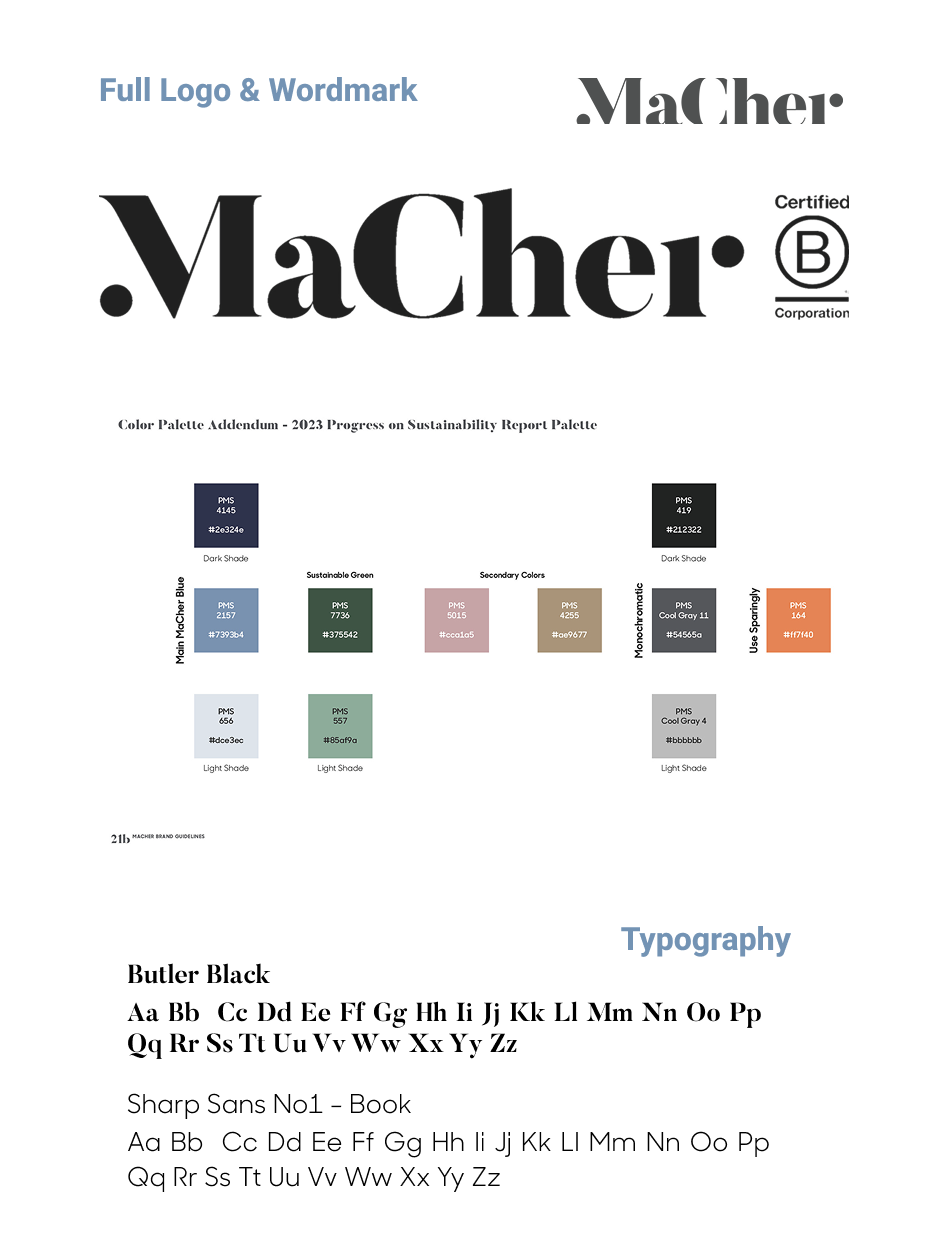
MaCher Style Guide

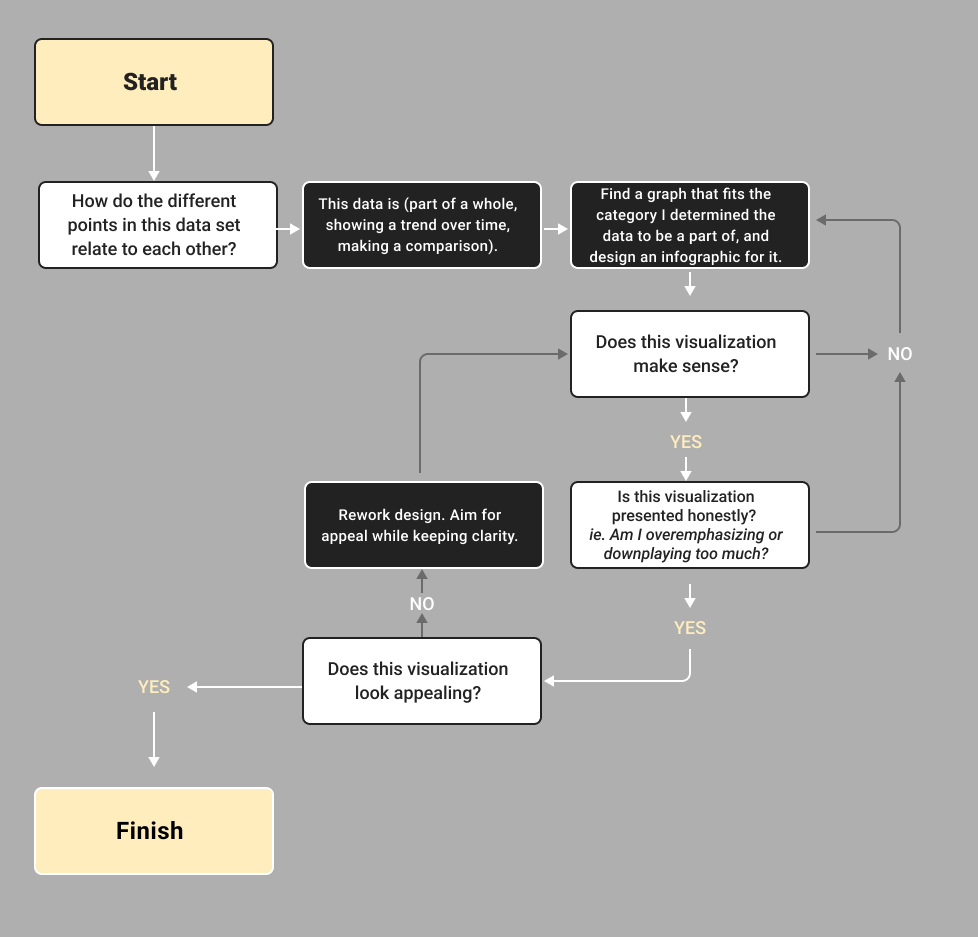
Parsing the Data: The data for this report was broken up into seven sections, and for each, I had to create a system for creating each infographic that accurately represents them. By breaking it down this way, it really helped me make more cohesive choices with the designs. It also took some of the guess-work out of the discovery phase, without making it so technical that I sacrificed creative presentation.

Referential chart for understanding how to parse MaCher data.

Drafting

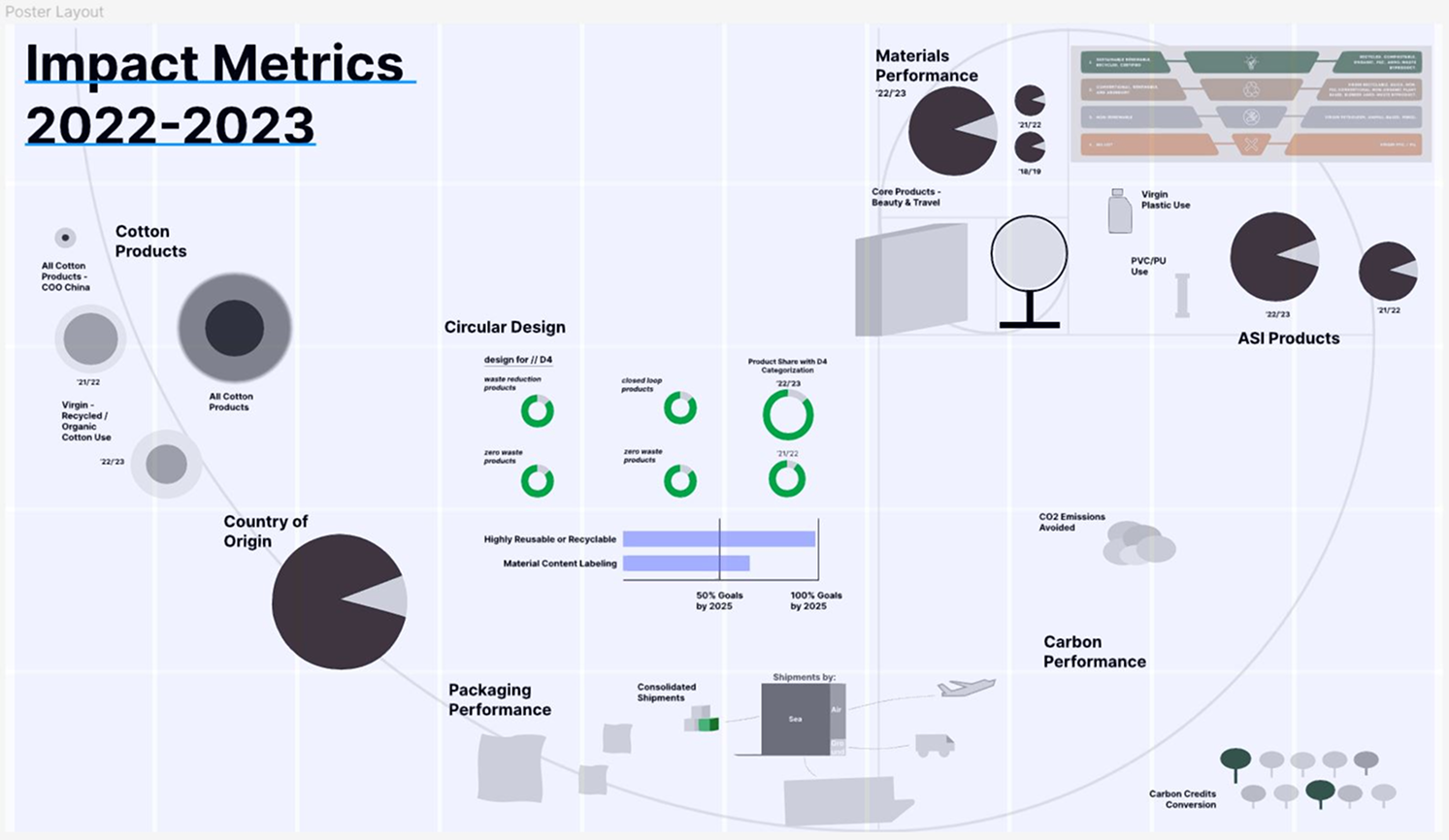
Originally, I had interpreted the report as a single poster. This helped me get a better understanding of how to make the infographics flow together, therefore telling a wider story. We start with sourcing, determine the sustainability practices used to make a product, compare its packaging and shipping methods, note the carbon credits bought with the order, and then lastly, check the materials performance and how sustainable those materials are.

First Draft of the Impact Report

Feedback

What worked most successfully for me in the selection process for my direction was:

-Preserved a minimalist layout and muted palette that aligned with the team’s styleResearched the team’s previous Impact Report to inform my own data presentations

-Not being afraid to take risks on more graphical representations (as seen in Figures A & B). My direction for Fig. A aligned perfectly with their partnership with a mangrove tree planting non-profit!

-Successfully visualized trends over a time period (as seen in Figures C & D)

-Balanced between overemphasizing successes and downplaying shortcomings via infographics

Final Product

The adjustments made for the final version of the ImpactReport saw some infographics and their topics split across multiple pages to give more breathing room to the information, and even some overhauls of infographics to call more attention to some facts and make them more accessible.

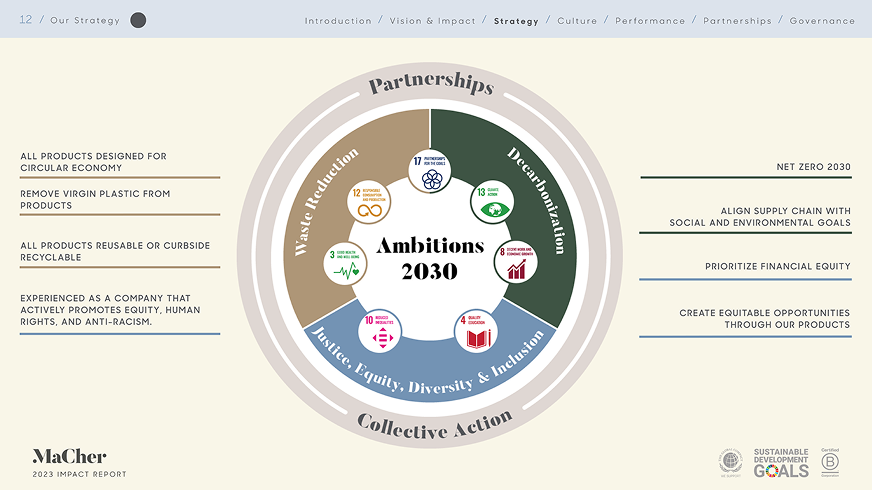
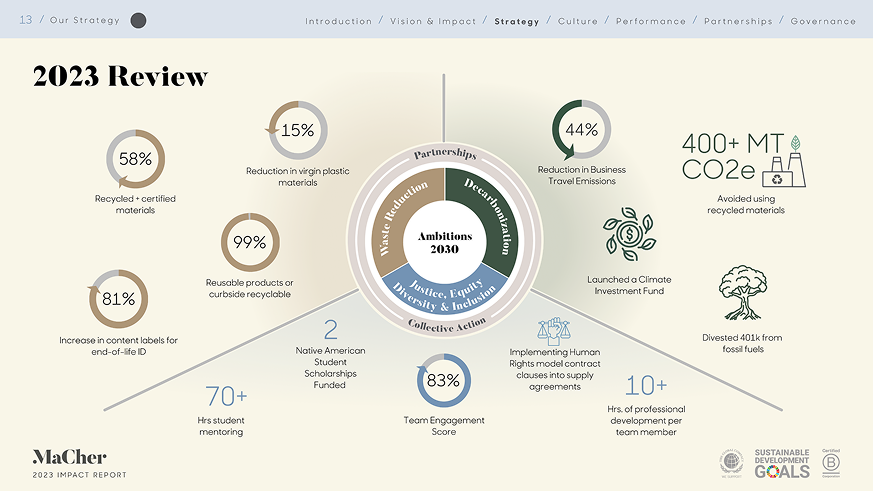
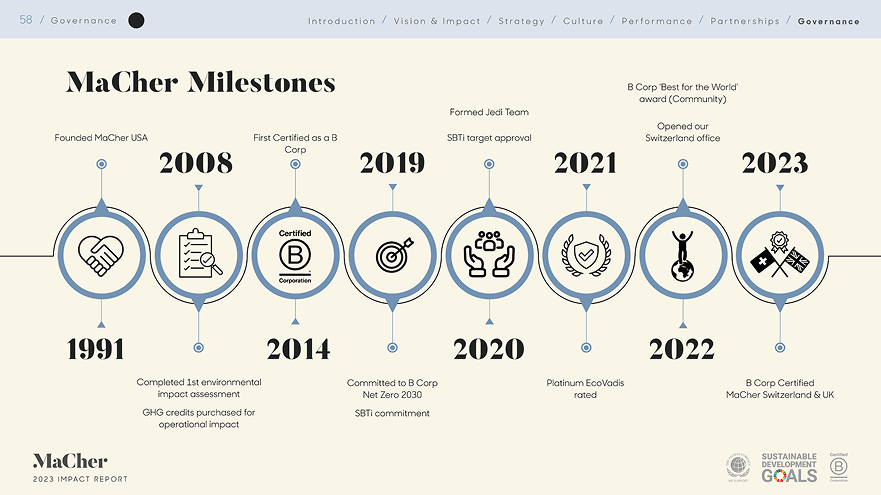
On top of the alterations made to my infographics, the final report had included four new pages that I happily took on. They needed unique graphics and a few new infographics for their Ambitions 2030 representation, the 2023 review summary of that, JEDI (Justice, Equity,Diversity & Inclusion), and their Milestones.

For the first two, concentric circles split into thirds represented the three areas designated by MaCher as where they can create the most impact- Waste Reduction, Decarbonization, and JEDI, formed the main graphic summarizing their goals. This was wrapped in another circle, labeled Partnerships and Collective Action, which emphasized how they could further meet those goals.

For the third new page, infographics were created to represent the demographic information within the organization.

And lastly, theMaCher Milestones page was an evolution of a graphic that worked really well in their last report. Reviews for the report were widely praised by the B Corp community, with multiple others referencing MaCher’s reports as the template for success in the years since!

Reflections

Being a part of the MaCher team creating the 2023 Impact Report was a highlight in my design journey. Not only was this the first formal design agency that I’ve worked with, itwas also my first time working with extensive data visualization. If I’m being completely honest, I don’t think that I would change a thing in my project, as the result was 100% the one that I had hoped for. However, if I were to do this project all over again, I think that I would experiment even more with the graphical representations of data. There was a lot of exploration that happened over three weeks, so I’m confident that having another week or two would have yielded some interesting results. Regardless, this is the kind of immersion therapy that I tend to thrive in when designing, and I loved every second of it!

works

Designing for Impact: Data Visualization & MaCher’s Impact Report

For this project, I began designing infographics based on seven data sets given by MaCher, and by using their brand guidelines, presented them as potential/mockup slides for their yearly Impact Report. I was responsible for creating new and updated infographics for certain pages, as well as creating new layouts to accommodate them in the report’s final draft.

Client • 

MaCher

Category • 

Interaction Design

Date • 

2024

Project Overview:

A data visualization and graphic design project in which I turned notable metrics from design agency, and proud B Corp, MaCher, into infographics for their yearly Impact Report.

My Role

Data Visualization & Graphic Design

Duration

16 Weeks

How might We...

design a game that tests players abilities to navigate cross-cultural communication through different scenarios?

Research Methods

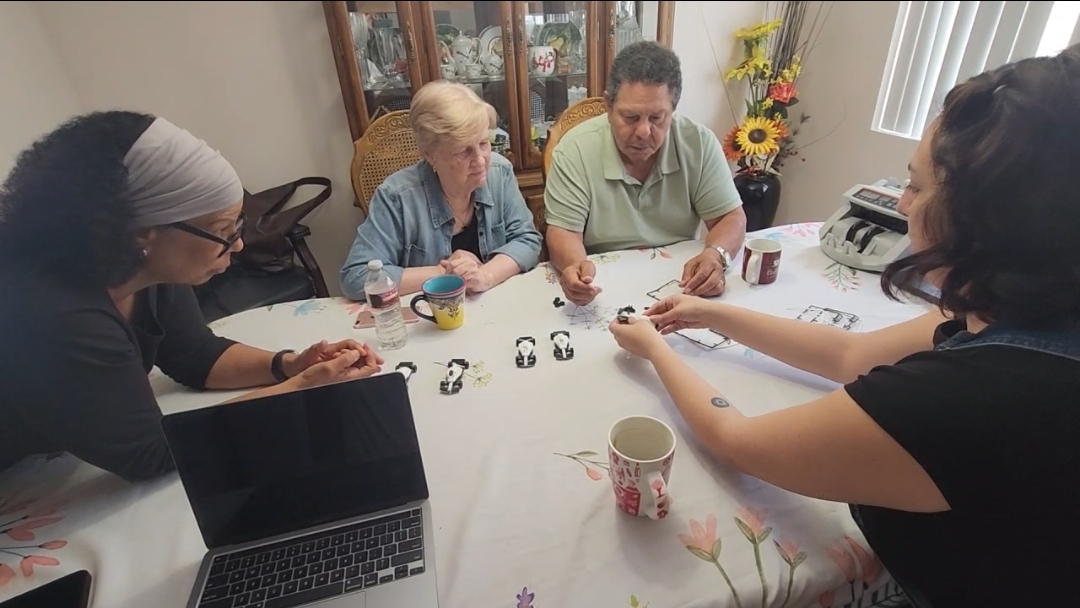
To further solidify our understanding of intercultural communication and how games could possibly be used as a medium for addressing the friction that it caused in a more focused product, we underwent using research methods such as: mind mapping, insight sorting, and from-to exploration. ‍

With the team also performing competitive analyses on games (the most informative of which will be mentioned below), we were also able to develop a matrix that compared how games created decision-experiences to more clearly understand how we wanted to represent Bridge to Kultur (as well as discover how it would play).

My three biggest sources of research were datavizproject.com, the r/DataIsBeautiful subreddit, and the MaCher impact report from the year before. The first resource was absolutely critical to understanding how data is displayed for particular purposes, and I revisited it almost daily to try and understand how I could do so for the data that MaCher gave us. For inspiration, the r/DataIsBeautiful subreddit was invaluable forgetting inspiration for the more unique infographics. And lastly, the previous impact report helped root the project in precedence and gave me a visual language to work off of.

MaCher Style Guide

Parsing the Data: The data for this report was broken up into seven sections, and for each, I had to create a system for creating each infographic that accurately represents them. By breaking it down this way, it really helped me make more cohesive choices with the designs. It also took some of the guess-work out of the discovery phase, without making it so technical that I sacrificed creative presentation.

Referential chart for understanding how to parse MaCher data.

Making the game

Game Narrative

At the heart of Bridge to Kultur is a world fractured by history, scarcity, and cultural divergence. Rather than casting players as conquerors or traders, the narrative invites them to step into the roles of diplomats. Individuals tasked with navigating trust, survival, and identity in a land on the brink of collapse.

Each of the four nations—Fire, Water, Earth, and Air—possesses its own worldview, aesthetic, and moral compass. Through branching scenarios, faction-based dilemmas, and evolving trust dynamics, the narrative challenges players not only to survive a looming Calamity, but to wrestle with the social and political costs of doing so. This isn't just a story players observe, but one that they co-author with every scenario they encounter, every alliance they build, and every bridge they dare—or refuse—to cross.

System Design

Creating the mechanics for Bridge to Kultur meant balancing narrative depth with strategic clarity. From the start, our goal was to design a system that encouraged meaningful choices, personal agency, and diplomatic tension—while staying intuitive enough to support both analog and digital components. The mechanics evolved through multiple iterations, each one bringing us closer to a structure that supports individual storytelling within a shared world. As someone who has been playing games for as long as they can remember, having the opportunity to design the mechanics and flow of the game was an exciting and complex challenge for me.

MaCher was in need of a new direction for their yearly Impact Report, and one of thecore parts of that was to improve how they displayed infographics and data visualization. As such, they were looking for unique representations of data that were representative of theinteresting metrics that they monitor, while also being aesthetically on-brand and pleasing to the eye.

Along with using the brand guidelines provided, there was one other important design constraint to note - No pictures. The former year’s report was heavily image-based, and made the file size too large . However, vector based graphics was a direction they were open to because they keep the file size small. This is important to note, as I wanted to present data in ways that weren’t just charts or graphs (and no tables!).

Created a report that: preserved the minimalist layout and muted palette that aligned with the team’s style, was rooted in research from previous Impact Reports, wasn’t afraid to take risks with some graphical representations, and balanced between overemphasizing success and downplaying shortcomings.

Product Concept Sketching

Originally, I had interpreted the report as a single poster. This helped me get abetter understanding of how to make the infographics flow together, therefore telling a wider story.

Prototyping

Physical Components

The adjustments made for the final version of the ImpactReport saw some infographics and their topics split across multiple pages to give more breathing room to the information, and even some overhauls of infographics to call more attention to some facts and make them more accessible.

Digital Component

Originally, I had interpreted the report as a single poster. This helped me get a better understanding of how to make the infographics flow together, therefore telling a wider story. We start with sourcing, determine the sustainability practices used to make a product, compare its packaging and shipping methods, note the carbon credits bought with the order, and then lastly, check the materials performance and how sustainable those materials are.

First Draft of the Impact Report

User Testing

Final Product

On top of the alterations made to my infographics, the final report had included four new pages that I happily took on. They needed unique graphics and a few new infographics for their Ambitions 2030 representation, the 2023 review summary of that, JEDI (Justice, Equity,Diversity & Inclusion), and their Milestones.

For the first two, concentric circles split into thirds represented the three areas designated by MaCher as where they can create the most impact- Waste Reduction, Decarbonization, and JEDI, formed the main graphic summarizing their goals. This was wrapped in another circle, labeled Partnerships and Collective Action, which emphasized how they could further meet those goals.

For the third new page, infographics were created to represent the demographic information within the organization.

And lastly, theMaCher Milestones page was an evolution of a graphic that worked really well in their last report. Reviews for the report were widely praised by the B Corp community, with multiple others referencing MaCher’s reports as the template for success in the years since!

Digital Demo Experience

Game On

Sign-In Screen.pngGIF - Sign in.gif
Main Menu.pngGIF - Main Menu.gif
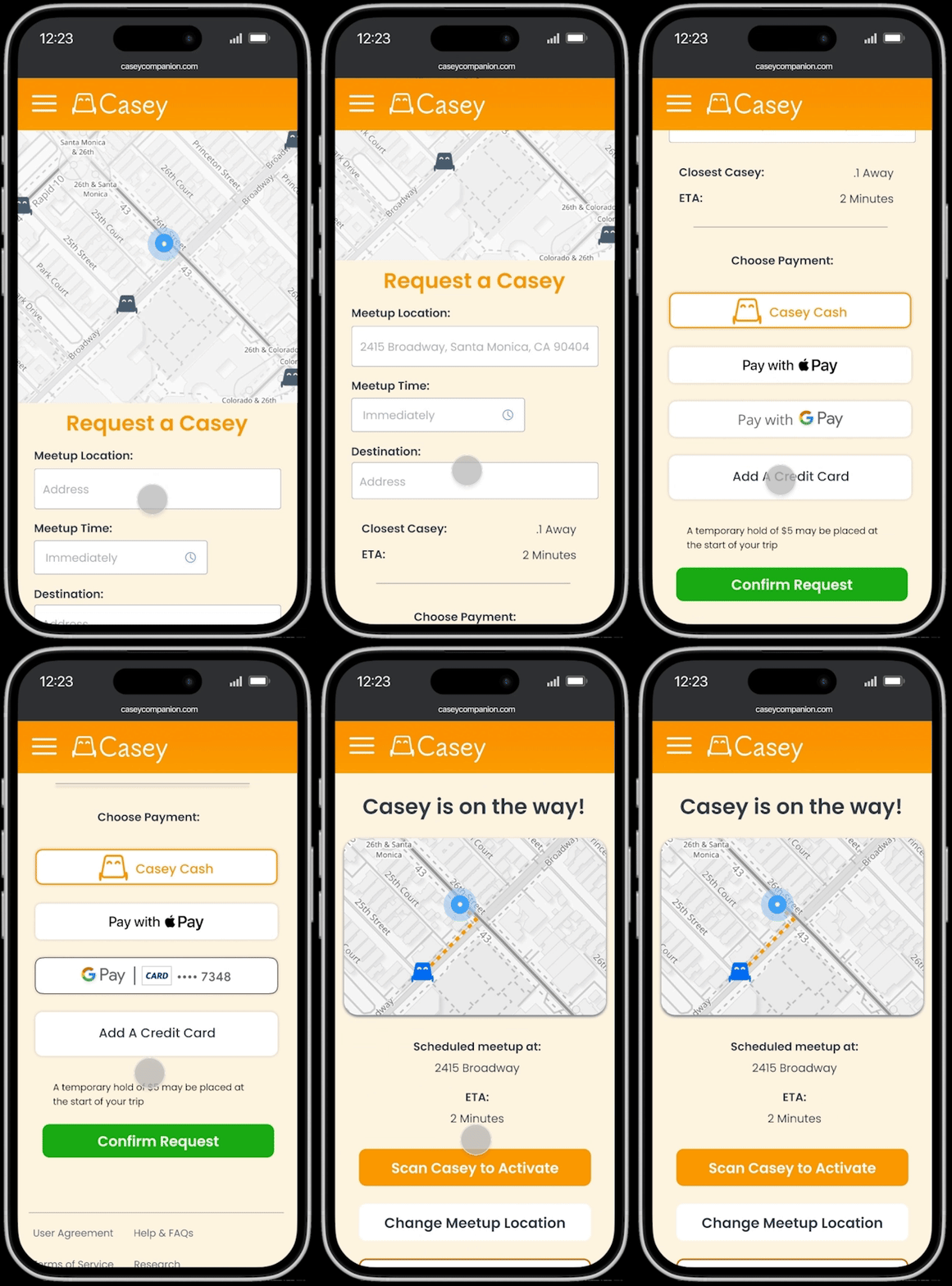
Order a Casey.pngGIF - Order Casey.gif
Scan to Activate Casey.pngGIF - Scan to Open.gif
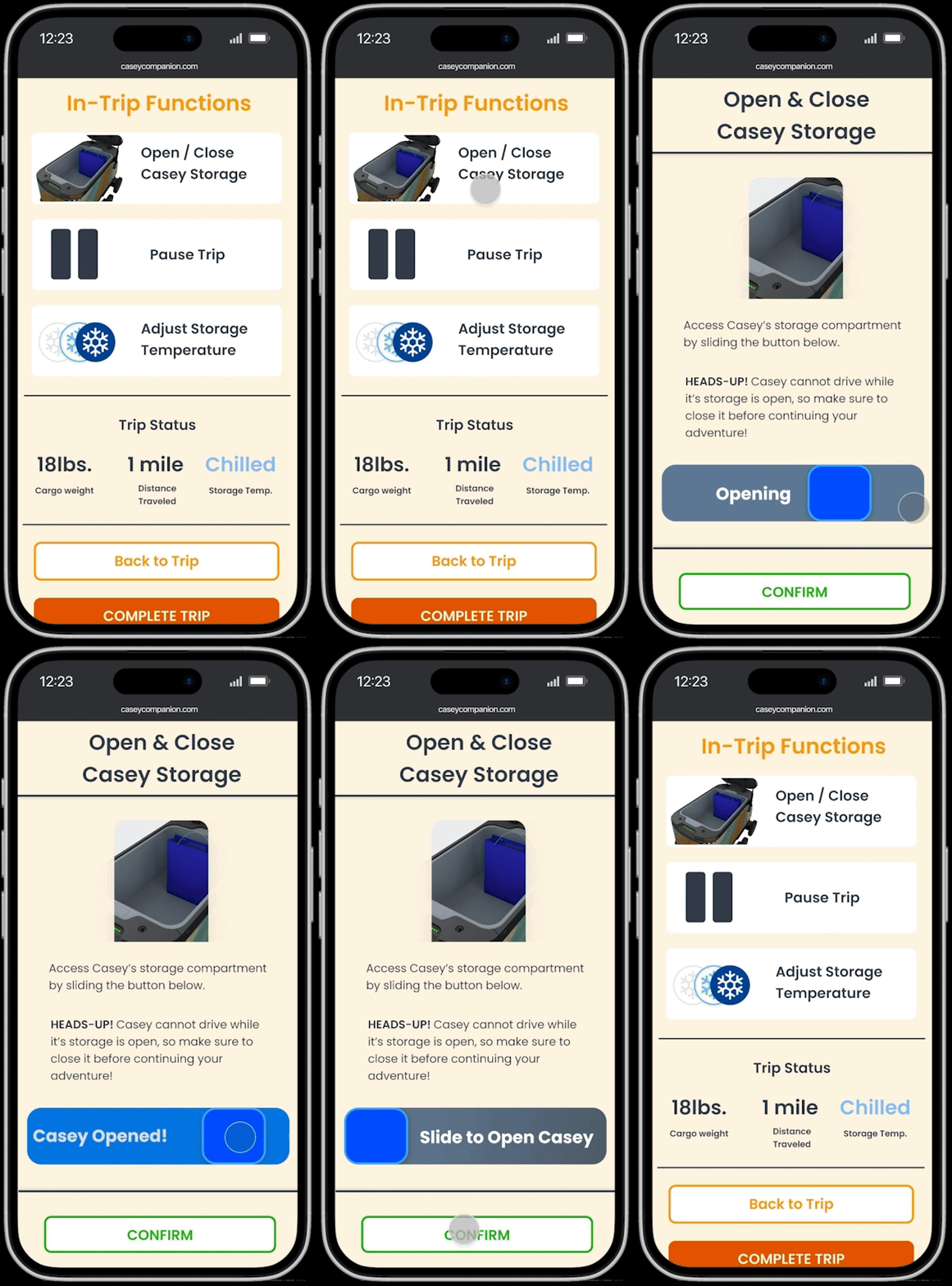
In-Trip Functions (Pause Trip).pngGIF - InTrip Functions Pause.gif
In-Trip Functions (Open Casey).pngGIF - InTrip Functions Open Casey.gif
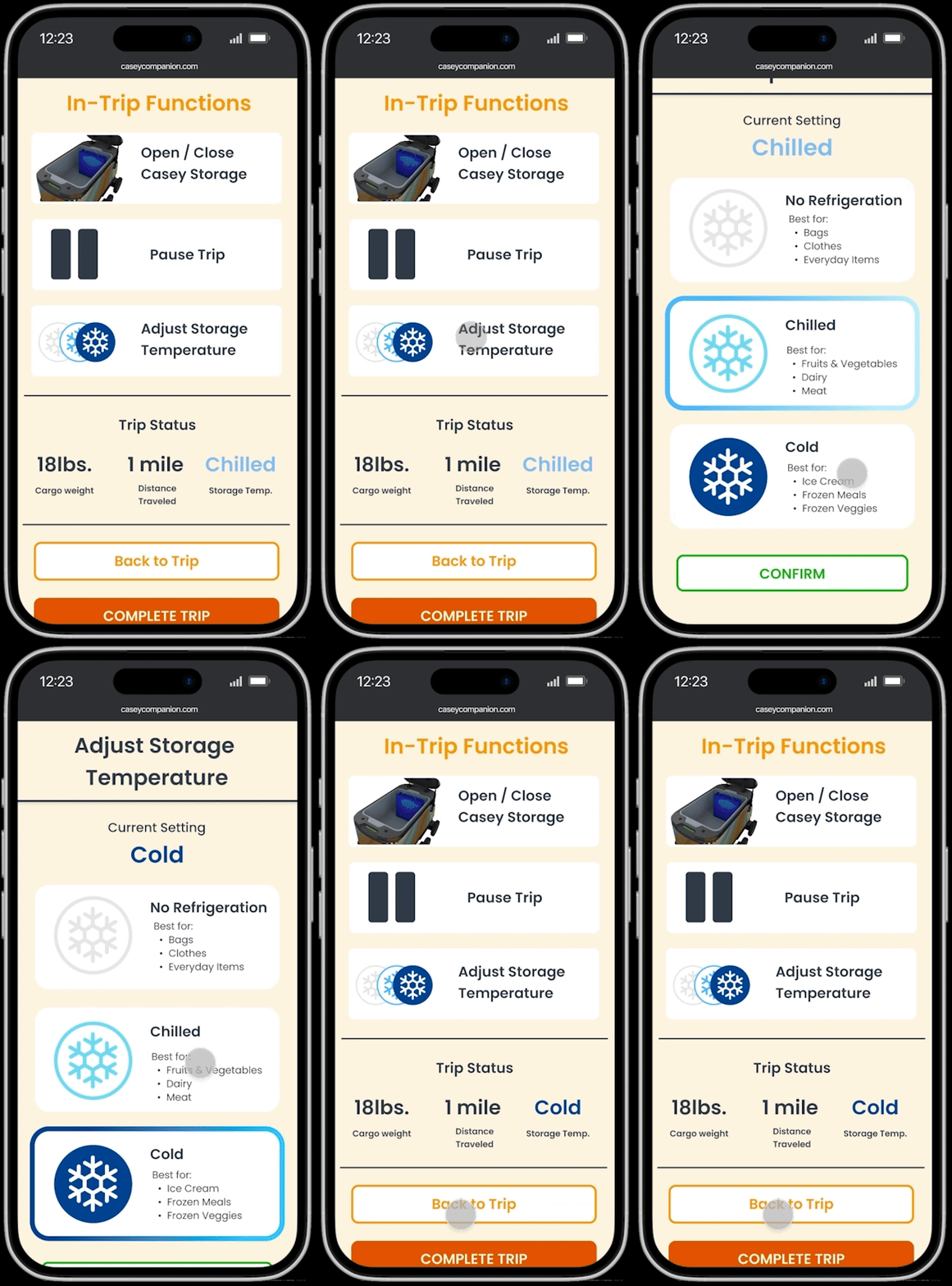
In-Trip Functions (Adjust Temp).pngGIF - In Trip Functions Adjust Temp.gif
Add a Stop to Trip.pngGIF - Add a Stop.gif
GIF - Complete Trip.gifTrip Complete!.png

Reflections

Being a part of the MaCher team creating the 2023 Impact Report was a highlight in my design journey. Not only was this the first formal design agency that I’ve worked with, itwas also my first time working with extensive data visualization. If I’m being completely honest, I don’t think that I would change a thing in my project, as the result was 100% the one that I had hoped for. However, if I were to do this project all over again, I think that I would experiment even more with the graphical representations of data. There was a lot of exploration that happened over three weeks, so I’m confident that having another week or two would have yielded some interesting results. Regardless, this is the kind of immersion therapy that I tend to thrive in when designing, and I loved every second of it!